Introduction
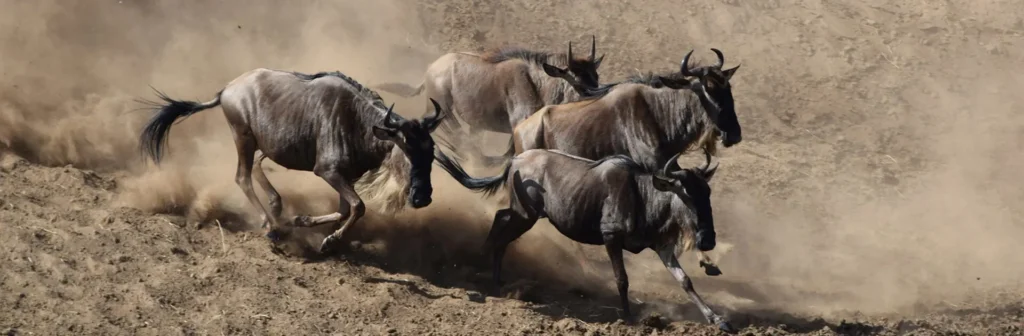
This wildebeest migration calendar breaks down exactly where the herds are, month by month, so you can time your Kenya safari perfectly. Most people planning a safari around the Great Migration focus on one thing: the Mara River crossings. And rightly so — they’re the single most dramatic wildlife spectacle on the continent. But the crossings are really just three or four months out of a cycle that never actually stops. The herds are moving somewhere, every single month of the year, across a roughly 1,000-kilometer round trip between southern Tanzania and Kenya’s Maasai Mara.
Knowing where the herds are outside the July–September crossing window matters just as much if you’re chasing calving season, want to avoid peak-season crowds and pricing, or you’re simply trying to build a full picture of how the migration actually works before you commit to travel dates.
This guide walks through the entire annual cycle, month by month. For the deep dive specifically on the Mara River crossings — timing, crossing points, and where to stay — we’ve covered that in full detail in [our dedicated Mara crossings guide], and we’ll point you there at the right moment below.
[Image suggestion: Herds spread across open plains, non-crossing scene — alt text: “wildebeest herds grazing Serengeti plains calving season”]
How to Use This Wildebeest Migration Calendar
| Months | Location | What’s Happening |
|---|---|---|
| January – February | Ndutu, Southern Serengeti | Calving season |
| March | Southern Serengeti | Herds still concentrated, calves strengthening |
| April – May | Central & Western Serengeti | Long rains, herds moving north |
| June | Grumeti River, Western Serengeti | First river crossings of the year |
| July – October | Northern Serengeti → Maasai Mara | Mara River crossings (see our full crossings guide) |
| November | Loliondo, Southern Mara | Short rains begin, herds move south |
| December | Southern Serengeti | Herds resettle ahead of calving season |
January – February: Calving Season on the Ndutu Plains
The cycle’s most overlooked chapter, and arguably its most moving. In the short-grass plains around Ndutu and the southern Serengeti, an estimated 500,000 calves are born within a tight two-to-three week window, most of them in February. Wildebeest calves can stand and run within minutes of birth — a survival necessity, since this concentration of vulnerable newborns draws every major predator in the ecosystem.
What to expect: Enormous herds packed onto open plains, newborn calves everywhere you look, near-constant predator activity as lion, cheetah, and hyena take advantage of the abundance.
Why it’s worth considering: Unlike the crossings, which depend on unpredictable timing and river conditions, calving season delivers guaranteed high-density wildlife viewing. Photographers in particular rate this period as highly as, sometimes higher than, the crossings themselves.
Good to know: This period is Tanzania-side, based around the Ndutu/southern Serengeti area rather than Kenya’s Maasai Mara.
March: The Herds Linger and Strengthen
Through March, the herds typically remain concentrated on the southern plains a little longer, as calves gain strength before the long march north begins. Grazing pressure builds on the short grass, and this is often the trigger for the herds starting to fan out toward central Serengeti as the month progresses.
What to expect: Still-strong herd concentrations, calves noticeably more mobile and active, early signs of northward movement by late March.
Why it’s worth considering: A slightly quieter alternative to peak February calving season, with many of the same benefits and typically better camp availability.
April – May: Long Rains and the Push North
Tanzania’s long rains typically fall across April and May, transforming the Serengeti into a deep green landscape and pushing the herds north and west through the central and western Serengeti in search of fresh grazing. This is genuinely the migration’s quietest, most unpredictable chapter — the animals are spread out over vast distances rather than concentrated in one dramatic location.
What to expect: Lush, photogenic green-season scenery, dramatic storm-lit skies, significantly fewer visitors, and occasional road disruptions from heavy rain.
Why it’s worth considering: This is consistently the lowest-rate period of the year across most camps and lodges, and it’s an excellent time for travelers who want a genuine safari at a lower cost and don’t need to see a river crossing to feel the trip was worthwhile. It also pairs well with birdwatching, since migratory bird species are abundant during the rains.
June: The First River Crossings, Away From the Crowds
By June, the leading herds reach the Grumeti River in the western Serengeti. While it lacks the fame of the Mara River, the Grumeti produces genuinely dramatic crossings of its own, complete with some of the largest Nile crocodiles in the ecosystem lying in wait, and with a fraction of the vehicle traffic that builds up around the Mara later in the season.
What to expect: The season’s first serious river crossings, herds funneling through riverine forest, comparatively few other vehicles at crossing points.
Why it’s worth considering: For travelers who want crossing drama without the peak-season congestion at the Mara, June is an underrated window — and it’s also the point at which the herds begin the final push toward Kenya.
July – October: The Mara River Crossings
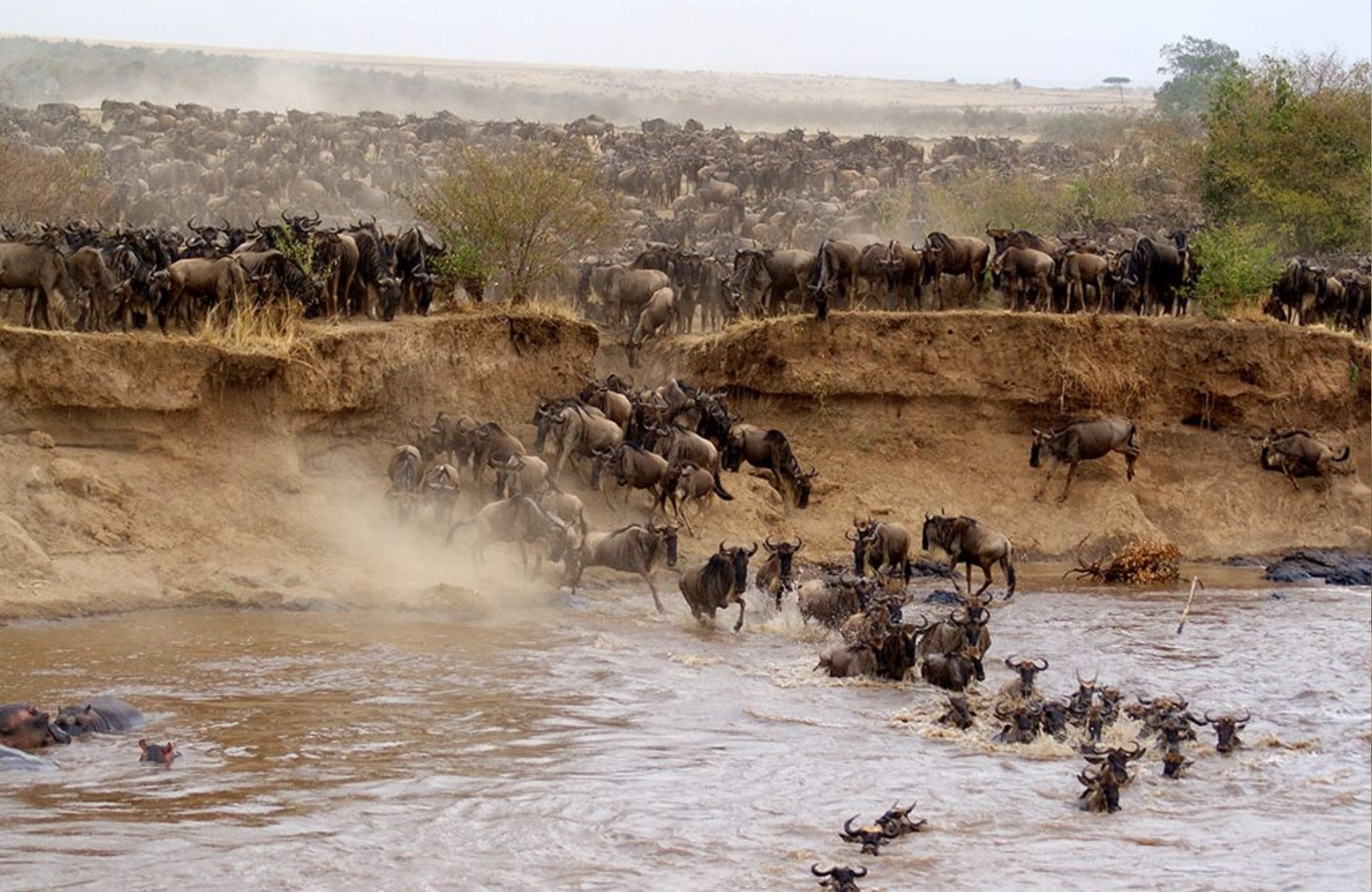
This is the chapter most people are planning around — and it’s the one we’ve covered in full depth already. Between July and October, the herds cross from Tanzania into Kenya’s Maasai Mara, with crossing intensity building through July, peaking in August and September, and gradually easing into October as the herds begin drifting south again.
Rather than repeat that detail here, we’ll point you straight to it: our [complete guide to the 2026 Mara River crossings] covers exactly when the crossings peak, the difference between the Sand River, Talek River, and Mara River crossings, Mara Triangle versus Mara North Conservancy, and where to stay — from riverfront luxury camps to more accessible options like Sopa Lodge.
November: The Short Rains and the Journey South Begins
As the short rains arrive in Tanzania, typically in November, the herds begin their return journey south, moving out of the Mara and back across the border via the Loliondo area. This transitional month is less predictable than peak season, with the herds thinning out of Kenya as they head home.
What to expect: Intermittent rainfall, herds progressively moving out of the Mara, green landscapes returning to both sides of the border, noticeably quieter camps and lower rates than the July–October peak.
Why it’s worth considering: A good option for travelers combining migration-region travel with broader Kenya wildlife viewing, since the Mara and surrounding conservancies remain excellent for general game viewing even as the main herds move on.
December: Resettling Ahead of Calving Season
By December, the majority of the herds have returned to Tanzania’s southern Serengeti plains, grazing and resettling in preparation for calving season to begin again the following month — closing the loop on the annual cycle.
What to expect: Herds largely back on the Tanzania side, green-season landscapes, strong general wildlife viewing across Kenya’s other parks for those not chasing the migration specifically.
Why it’s worth considering: A good period to combine a shorter migration-region visit with Kenya’s other headline parks, since the migration itself has moved south of the Kenyan border by this point.
Planning Your Trip Around This Calendar
The honest answer to “when should I go” depends entirely on what you want from the trip:
- Chasing the river crossings specifically? Head to our [full Mara crossings guide] for the detailed breakdown of July–October.
- Want guaranteed high-density wildlife viewing without the crossing-season crowds? Calving season in January–February is genuinely underrated.
- Traveling on a budget or want a quieter, greener safari? April, May, or November offer meaningfully lower rates and far fewer other travelers.
- Want a crossing experience without peak-season congestion? June’s Grumeti crossings are worth serious consideration.
Plan Your Migration Safari With Us
Wherever the herds are when you’re ready to travel, we build itineraries around exactly this kind of seasonal timing — whether that means a calving-season trip to Tanzania, a quieter shoulder-season safari, or a Mara-based itinerary timed for peak crossing season.
[Get in touch] for a tailored itinerary matched to your travel dates, or explore our [migration safari packages] to see options by season.