Last updated: July 2026
A Kenya safari glossary is one of those things nobody thinks to ask for until they’re already deep in a conversation with their tour operator, nodding along to words like “sundowner,” “conservancy,” or “Big Five” without quite being sure what’s actually meant. This guide breaks down the terms you’ll actually hear — from wildlife and vehicles to accommodation and geography — so you can plan (and enjoy) your trip with full confidence.
Wildlife Terms
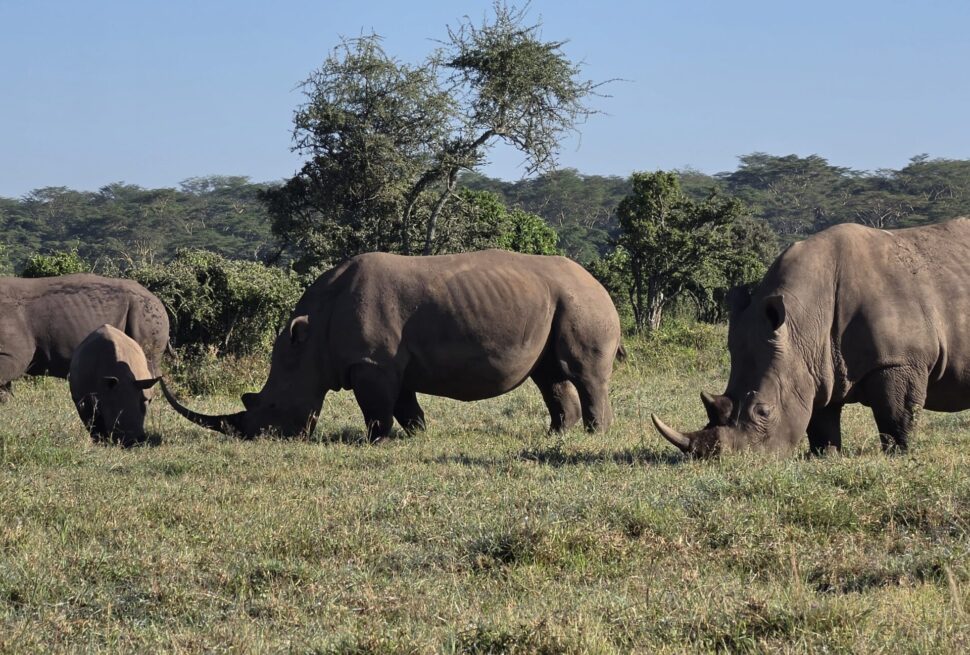
Big Five — Lion, leopard, elephant, buffalo, and rhino. The term originated with big-game hunters, who considered these the five most dangerous and difficult animals to hunt on foot, not the five most impressive to see. It’s now used purely as a wildlife-viewing benchmark.
Little Five — A playful counterpart to the Big Five: elephant shrew, ant lion, leopard tortoise, rhinoceros beetle, and buffalo weaver (a bird). A fun scavenger-hunt theme for travelers looking beyond the headline species.
Plains game — General term for the grazing and browsing herbivores that make up the bulk of what you’ll see on a typical game drive — zebra, wildebeest, gazelle, impala, and similar species — as opposed to predators or the Big Five.
Habituated — Describes wildlife that has become accustomed to vehicle presence and doesn’t alter its behaviour when a safari vehicle approaches. This is why guides can often get remarkably close without disturbing an animal.
Endemic species — A species found naturally in one specific region and nowhere else. Kenya has several endemics, particularly among birds and reptiles in specific ecosystems like Samburu.
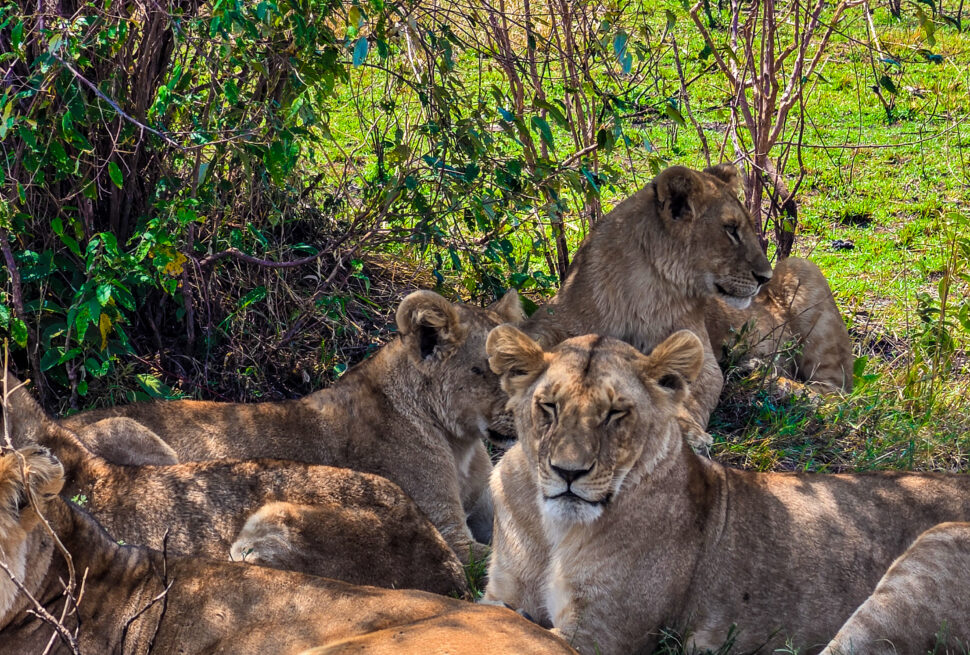
Pride — The correct collective term for a group of lions. Other useful collective nouns: a “tower” of giraffes, a “dazzle” of zebras, a “journey” of giraffes (both terms are used), and a “crash” of rhinos.
Predator-prey dynamic — What guides are often narrating during a sighting — how a specific predator species hunts, and how prey species have adapted to survive it. Understanding this context is often what turns a “we saw a lion” moment into a genuinely memorable one.
Safari Logistics Terms
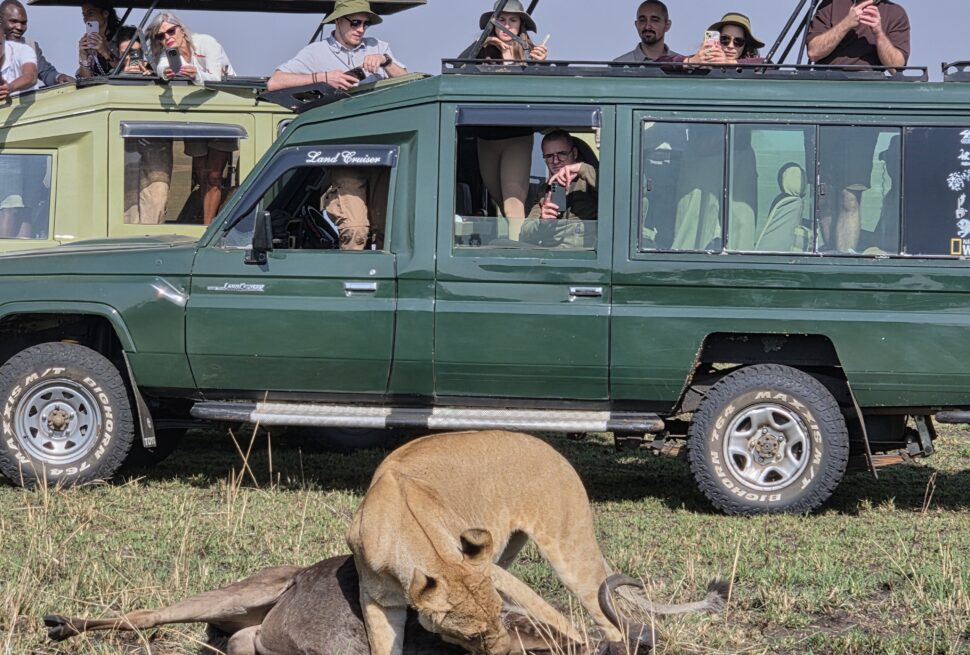
Game drive — A guided outing, typically by 4×4 vehicle, focused on finding and observing wildlife. Most itineraries include two per day: an early morning drive and a late afternoon/evening drive, timed around when animals are most active.
Game walk (or bush walk) — A guided walk, usually with an armed ranger, focused on smaller details of the ecosystem that a vehicle moves past too quickly to notice — tracks, plants, insects, and bird calls. Not available in every park; more common in conservancies and certain reserves.
Night game drive — A drive conducted after dark using a spotlight, revealing nocturnal species rarely seen during the day (genets, bush babies, aardvarks, and hunting predators). Only permitted in private conservancies, not in most national reserves or parks.
Off-road driving — Leaving marked tracks to follow wildlife directly. Prohibited in the Maasai Mara National Reserve itself but permitted in most surrounding private conservancies, one of their key advantages.
Sundowner — A drink, typically served from the vehicle or at a scenic spot, timed to coincide with sunset at the end of an afternoon game drive. A near-universal safari tradition.
Bush breakfast/bush dinner — A meal served outdoors at a scenic location during a game drive, rather than back at camp, often as a special addition to an itinerary.
Tracker/spotter — A staff member, sometimes riding on a special seat mounted to the vehicle’s front, who uses tracking skills (footprints, scent, disturbed vegetation) to help locate wildlife, working alongside the guide.
Pop-top vehicle — A safari vehicle with a roof that lifts up, allowing passengers to stand and view/photograph wildlife with an unobstructed 360-degree view, rather than shooting through a window.
Accommodation Terms
Lodge — A permanent, fixed structure, typically with hotel-style rooms, often larger in capacity than a tented camp, and generally the most infrastructure-heavy accommodation option on safari.
Tented camp — Semi-permanent canvas tents, usually on a raised platform with an ensuite bathroom, offering a more immersive “in the wild” feel while retaining comfortable amenities.
Mobile tented camp — A camp that physically relocates several times a year, often following the wildebeest migration, offering a more rustic and intimate experience than fixed camps.
Boma — Traditionally a livestock enclosure in Maasai culture, the term is also used more loosely at some lodges to describe an open-air dining or gathering area, often used for evening meals with a fire.
All-inclusive — A package rate covering accommodation, meals, and game drives, though “all-inclusive” doesn’t always mean park fees, conservancy fees, drinks, or tips are included — always confirm exactly what’s covered.
Geography & Conservation Terms
Conservancy — Privately or community-managed wildlife land bordering a national park or reserve, typically offering off-road driving, night drives, and lower visitor density than the main protected area. See our full guide to the [Best Maasai Mara Conservancies] for more detail.
Kopje (pronounced “koppy”) — A small rocky outcrop rising from otherwise flat plains, often used by lions and leopards as a resting or vantage point. A classic feature of Mara and Serengeti landscapes.
Greater Mara Ecosystem — The full combined area of the Maasai Mara National Reserve plus its surrounding private conservancies, since wildlife moves freely across the entire region regardless of administrative boundaries.
Ranger — A government or conservancy-employed staff member responsible for anti-poaching patrols and wildlife protection, distinct from a guide (who focuses on the visitor experience) though the two roles sometimes overlap on walks.
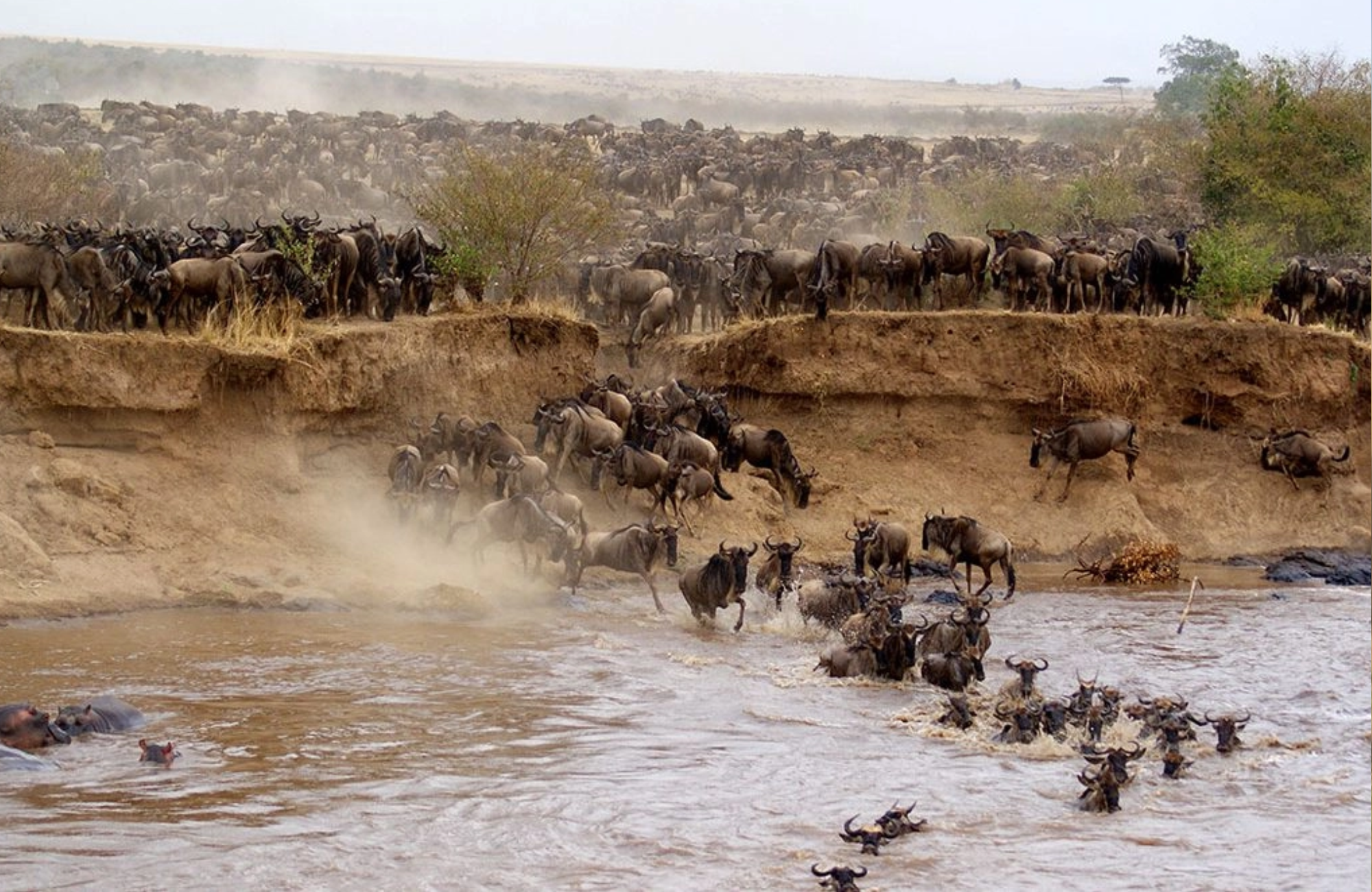
Migration corridor — The general path wildebeest and other migratory species follow annually between the Serengeti and Maasai Mara ecosystems, shaped by rainfall and grass availability rather than a fixed route.
Watering hole — A natural or man-made water source that draws wildlife, especially during dry season, making it a reliable spot for sightings.
Hide — A concealed structure, often near a watering hole, allowing visitors to observe wildlife up close without being seen or disturbing natural behavior.
Frequently Asked Questions
What does “Big Five” actually mean? It refers to lion, leopard, elephant, buffalo, and rhino — originally named for being the five most challenging animals to hunt on foot, now used purely as a wildlife-viewing benchmark.
What’s the difference between a game drive and a game walk? A game drive is a vehicle-based outing focused on covering ground and finding wildlife; a game walk is a slower, guided outing on foot, usually with an armed ranger, focused on smaller ecosystem details a vehicle would miss.
What is a conservancy, and how is it different from a national reserve? A conservancy is privately or community-managed land bordering a national reserve, typically allowing off-road driving, night drives, and walking safaris — all restricted in the main reserve itself.
Why can’t I go on a night game drive everywhere in Kenya? Night drives are only permitted in private conservancies, not in national parks or reserves like the main Maasai Mara National Reserve, where nighttime driving rules are stricter.
What is a sundowner? A drink served at sunset, typically at a scenic spot during or after an afternoon game drive — one of the most universal safari traditions.
This glossary reflects common terminology used across Kenya’s safari industry as of July 2026. Some terms and practices can vary slightly by operator, conservancy, or region.