
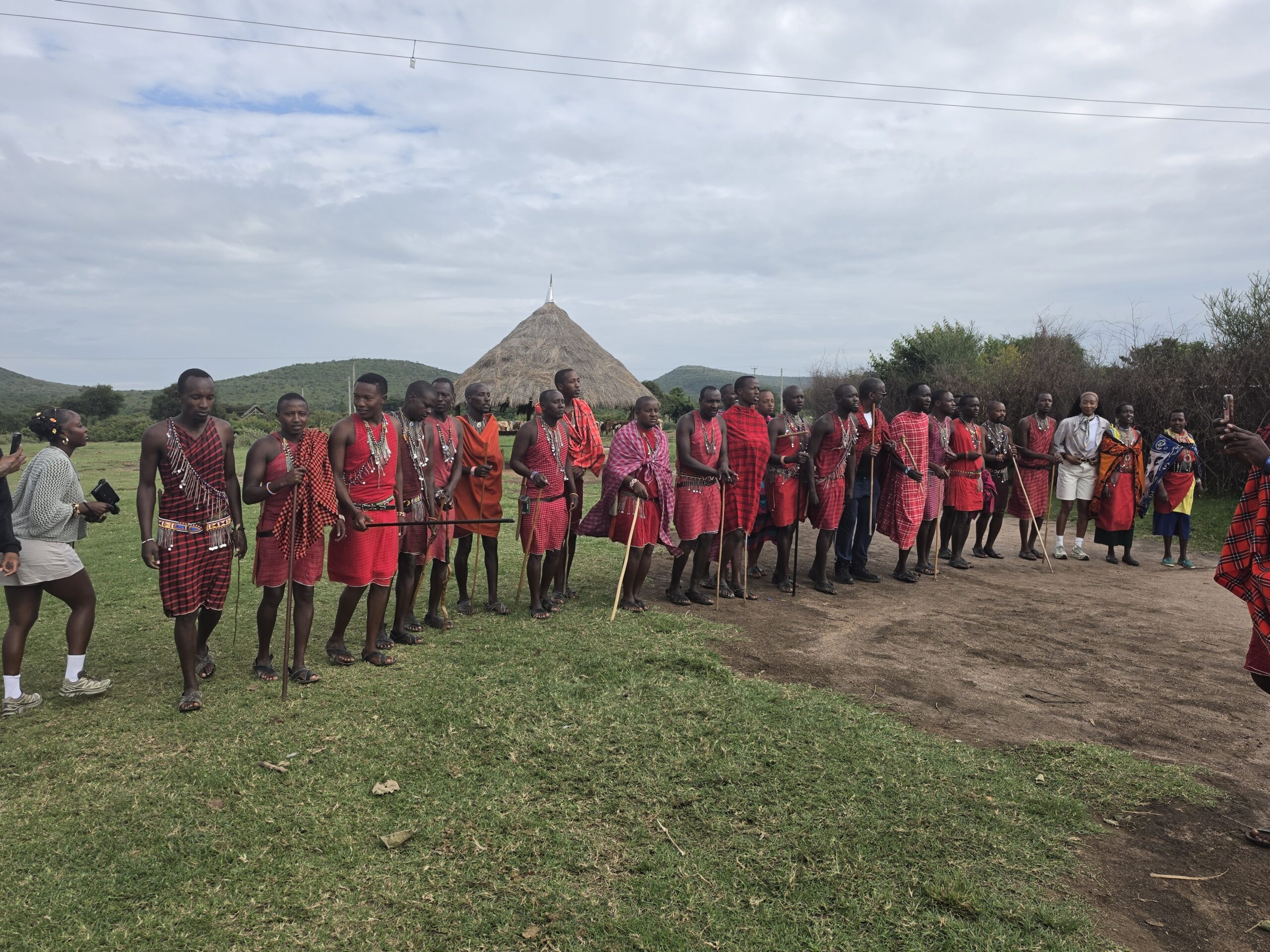
A Maasai village visit is one of the most meaningful stops on a Mara itinerary, though it’s often misunderstood before you arrive. Somewhere between your morning and afternoon game drives, most Maasai Mara itineraries set aside an hour or two for something different: a visit to a real, lived-in Maasai village. It’s easy to assume this is a staged, tourist-only performance — a quick photo stop between wildlife sightings. It isn’t. What you’re stepping into is raw, largely unscripted daily life that has continued in roughly the same form for centuries, just outside the reserve’s boundaries. Here’s exactly what to expect, and what it actually means.
What Happens During a Maasai Village Visit
Most Maasai village visits happen on community land bordering the Mara reserve itself — land the Maasai have called home for centuries, long before the reserve existed as a protected area. As you approach on foot, you’ll typically see the outline of the village before you reach it: a circular cluster of low huts enclosed by a thick, thorny acacia-branch fence built for one practical purpose — keeping cattle in at night, and lions and hyenas out.
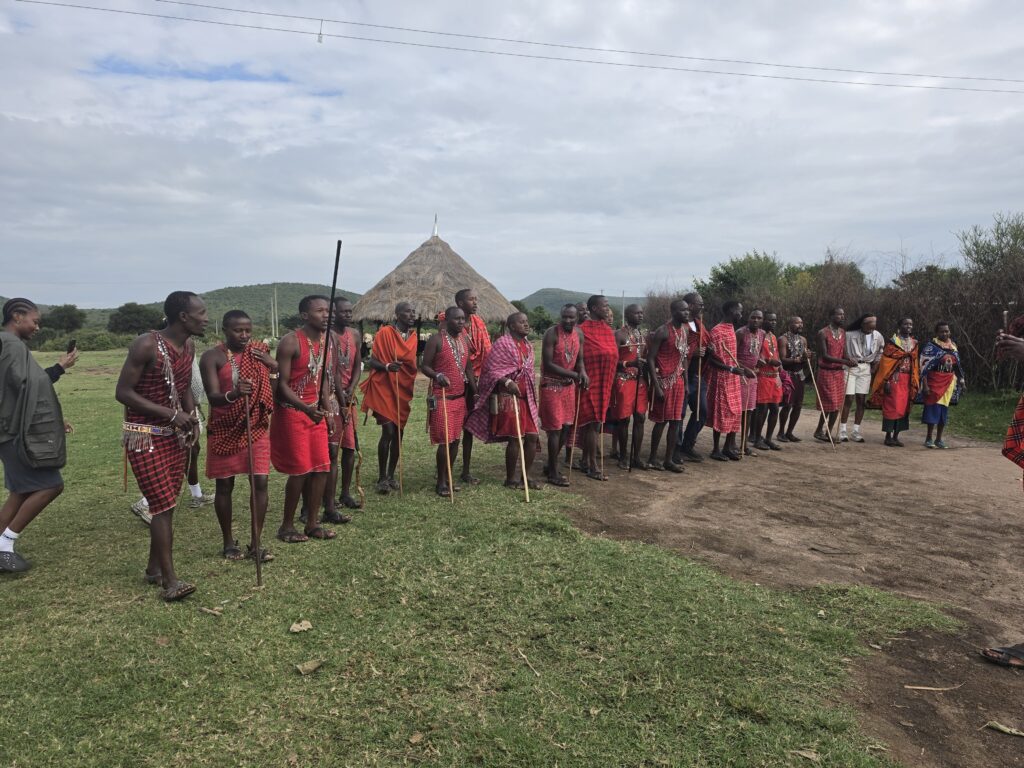
You’ll usually be met at a respectful distance by the village chief and welcomed with song. It’s common for the welcome to build into the adumu — the well-known Maasai jumping dance — performed by the warriors of the village. This isn’t fabricated for tourists; it’s a genuine cultural practice, traditionally tied to the eunoto ceremony marking a young warrior’s passage into senior status. What you see on a village visit is a real tradition shared in a shortened, visitor-friendly form — not a fake one. Guests are almost always invited to join the circle and try jumping themselves, and yes, you will not out-jump a Maasai warrior — this is genuinely one of the more memorable, laugh-out-loud moments most travelers take home from Kenya.
Inside the Manyatta
The village itself is called a boma, and the individual homes within it are called manyattas — low, single-entrance huts built from a framework of timber poles woven with smaller branches, then plastered over with a mixture of mud, grass, cow dung, and ash. It sounds basic described this way, but the result is a genuinely sturdy, weatherproof structure that a family builds and maintains, typically the work of the women of the household.
Step inside — and you likely will be invited to — and your eyes will need a moment to adjust. Windows are minimal, deliberately so, to keep the space cool and secure. Inside, you’ll usually see a small earthen cooking stove, firewood, and separate sleeping areas partitioned for parents and children. There’s no piped water, no electricity, no gas. Everything — cooking, sleeping, socializing, storing food — happens within this one modest space. It’s a striking, honest contrast to the safari lodge you’ll return to that evening, and that contrast is precisely the point.
Cattle: The Center of Everything
If there’s one thing to understand before you go, it’s this: for the Maasai, cattle are not simply livestock — they are the foundation of identity, wealth, and social standing. Traditional Maasai belief holds that all the world’s cattle were entrusted to them, and their diet, economy, and culture have been built around that belief for generations.
Wealth is measured in cattle, not currency. A family’s herd size signals status. Cattle are central to bridewealth in marriage. And the rhythm of daily life still revolves entirely around them: mornings are busy with women and girls milking cows and goats, while the men and boys — the herders — take the cattle out to graze the open plains, following the same seasonal movement toward water and grass that has shaped Maasai life for centuries. Traditional diet has historically included milk, meat, and, on occasion, blood drawn from cattle — a practical adaptation to a semi-nomadic pastoral life.
Elders, Warriors, and the Structure of Maasai Society
Maasai society is organized around clear, defined life stages, known as an age-set system, and understanding it will make everything you see on your visit click into place.
Boys grow up at home until adolescence, when they undergo initiation rites marking their transition toward becoming morans — warriors. Traditionally, morans then live together for years in their own camp, learning to protect the community’s cattle and family, developing the independence and toughness the role demands. It’s only after further ceremony — the eunoto, often lasting several days and including feasting, singing, and the shaving of the moran’s long hair — that a warrior transitions to senior status, becomes eligible for marriage, and rejoins the broader community.
Elders, in turn, hold the accumulated authority of having passed through every one of these stages themselves. Decisions affecting the village, disputes, and cultural knowledge all run through the elders, and it’s typically the village chief — himself a respected elder — who welcomes you and guides the structure of your visit.
Beadwork, Dress, and What It Signals
You’ll notice it immediately: vivid red-and-blue shukas (the traditional wrapped garment), and elaborate, colorful beaded jewelry worn by both men and women. This isn’t just decoration. Beadwork patterns and colors traditionally signal information about age, status, and marital state within the community — a visual language as much as an aesthetic one. Village visits typically end with the chance to browse and buy handmade crafts directly from the artisans who made them — genuinely worth doing, both to support the household directly and because asking about the meaning behind a specific piece often leads to the most interesting conversation of the whole visit.
Is It Worth Doing?
Honestly — yes, provided you approach it as a real cultural exchange rather than a checklist photo stop. The entry fee (typically a modest per-person contribution, arranged through your safari operator) goes directly toward the community, and for many Maasai families, tourism revenue is a deliberate, strategic choice — it provides a concrete financial reason to maintain traditional grazing land and a pastoral way of life, rather than converting it to agriculture, which in turn helps keep the broader Mara ecosystem intact for the wildlife you came to see in the first place. A village visit, done properly, isn’t separate from your safari — it’s part of the same story.
Add It to Your Maasai Mara Safari
A Maasai Village visit is included in nearly every Savanna Sojourns Mara itinerary, typically scheduled on your first full day alongside your afternoon game drive. If you’d like to build one into a custom trip, or simply have questions about what to expect, Savanna Sojourns Safaris is happy to help you plan it thoughtfully.
Ready to experience it for yourself? Get in touch with our team or explore our Maasai Mara safari packages to see where a village visit is already built in.