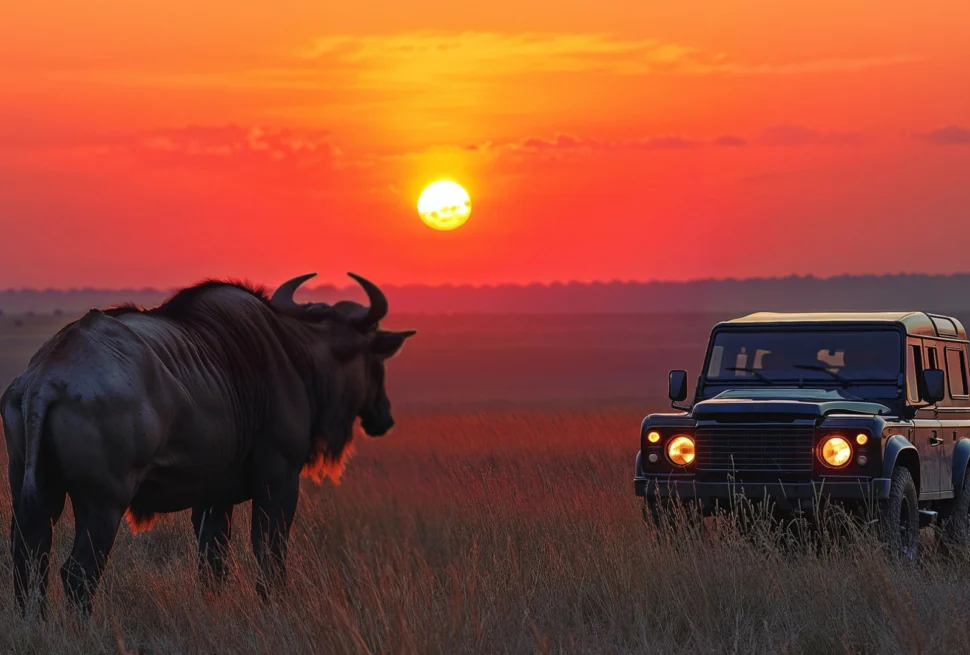
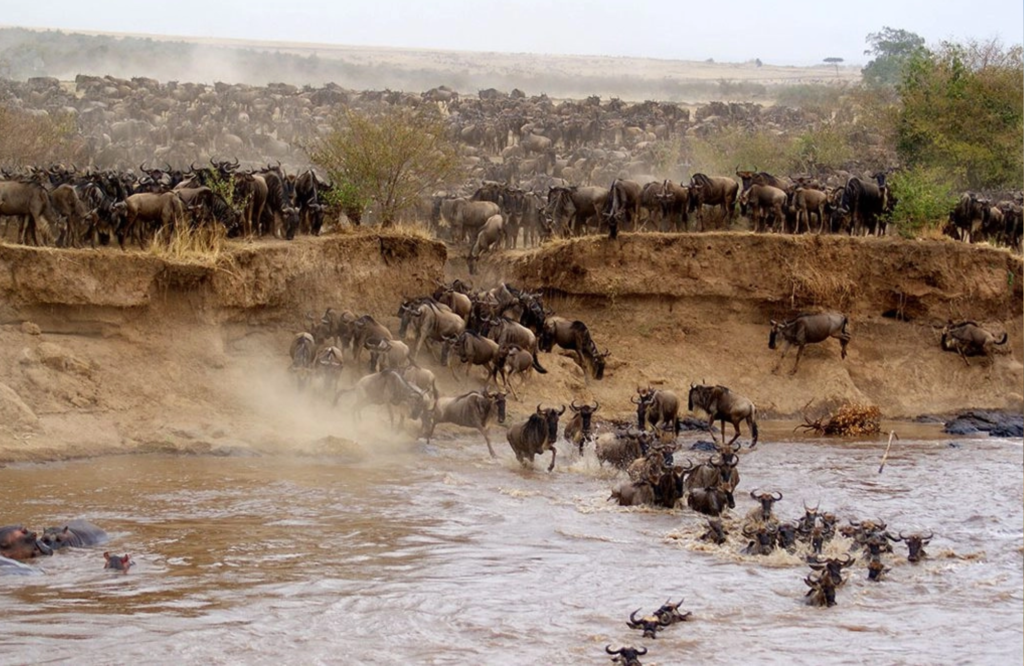
Mara river crossings 2026 are shaping up to be one of the greatest wildlife spectacles on the planet. There is nothing on Earth quite like it. Over 1.5 million wildebeest, alongside roughly 200,000–400,000 zebra and hundreds of thousands of gazelle, moving in one continuous, clockwise loop between Tanzania’s Serengeti and Kenya’s Maasai Mara — a journey of roughly 3,000 kilometres driven by nothing more than the search for rain and fresh grass. This is the Great Wildebeest Migration, and the Mara River crossings are its most dramatic chapter.
If you’re planning a 2026 safari around this spectacle, here’s everything you need to know: where the herds are right now, when the crossings peak, which crossing points to target, and where to stay to get the best of it — without necessarily paying riverfront-camp prices.
Where Does the Migration Come From?
The migration isn’t a single event — it’s a year-round cycle. It begins in Tanzania’s southern Serengeti, around the Ndutu Plains, where an estimated 500,000 calves are born within a two- to three-week window, usually in January and February. From there, as the southern plains dry out, the herds push north through the central and western Serengeti, reaching the Grumeti River around June, before funneling into the northern Serengeti and finally spilling across the border into Kenya’s Maasai Mara.
Once in the Mara, the herds fan out across the plains before eventually turning south again as the short rains begin in Tanzania around November — crossing the river once more, this time heading home, ready to begin the entire cycle again.
For the full month-by-month breakdown of the entire annual cycle, including calving season and the Grumeti crossings, see our complete migration calendar.
Where the Herds Are Right Now (Early July 2026)
As the 2026 Mara River crossings season gets underway, the front-runner herds are just beginning to arrive on the Kenyan side. Zebra typically lead the way, with wildebeest following close behind — and reports from the Mara are already showing the first small groups testing the crossings at the Sand River, with early wildebeest crossings starting to appear at the Mara River itself. This is the calm before the real drama: numbers build steadily through July, and by August the plains are transformed.
The Three Rivers: Why Only the Mara River Delivers the Drama
Herds entering Kenya actually cross three rivers, in sequence — but they are not equal:
- Sand River — shallow and low-drama, mostly a formality
- Talek River — similarly modest, rarely produces dramatic scenes
- Mara River — this is the one worth traveling for. Steep banks, strong currents, and Nile crocodiles waiting below combine to create the frenzied, high-stakes crossings you’ve seen in documentaries
Mara River Crossings 2026: Month by Month Intensity
| Month | What to Expect |
|---|---|
| July | Herds begin arriving in the Mara from mid-month. Numbers build steadily; first serious Mara River crossing attempts begin, mostly around the Mara Triangle and Talek areas |
| August | Peak migration month. The largest herds, the most frequent crossings — sometimes several in a single day — and predator activity at its most intense |
| September | Crossings continue but become less frantic as herds disperse across the plains to graze; still excellent for river action and outstanding for lion, leopard, and cheetah sightings |
| October | The herds begin drifting south as the short rains approach in Tanzania; crossings become less frequent but still occur, often with far fewer vehicles |
If your priority is the crossings themselves, August and September offer the strongest odds for the 2026 Mara River crossings. If you’d rather have space to yourself and don’t mind slightly lower odds, late June or early October are worth considering.
Not sure how many days you need to properly experience this? See our How Many Days Do You Need for a Migration Safari guide.
Crossing Points: Mara Triangle vs. Mara North
Most of the classic river-crossing action takes place along the Mara Triangle, on the western side of the reserve, where the river bends create natural funnelling points that concentrate the herds — among the best spots to witness the 2026 Mara River crossings. This is the area most associated with the dramatic leaps and crocodile encounters.
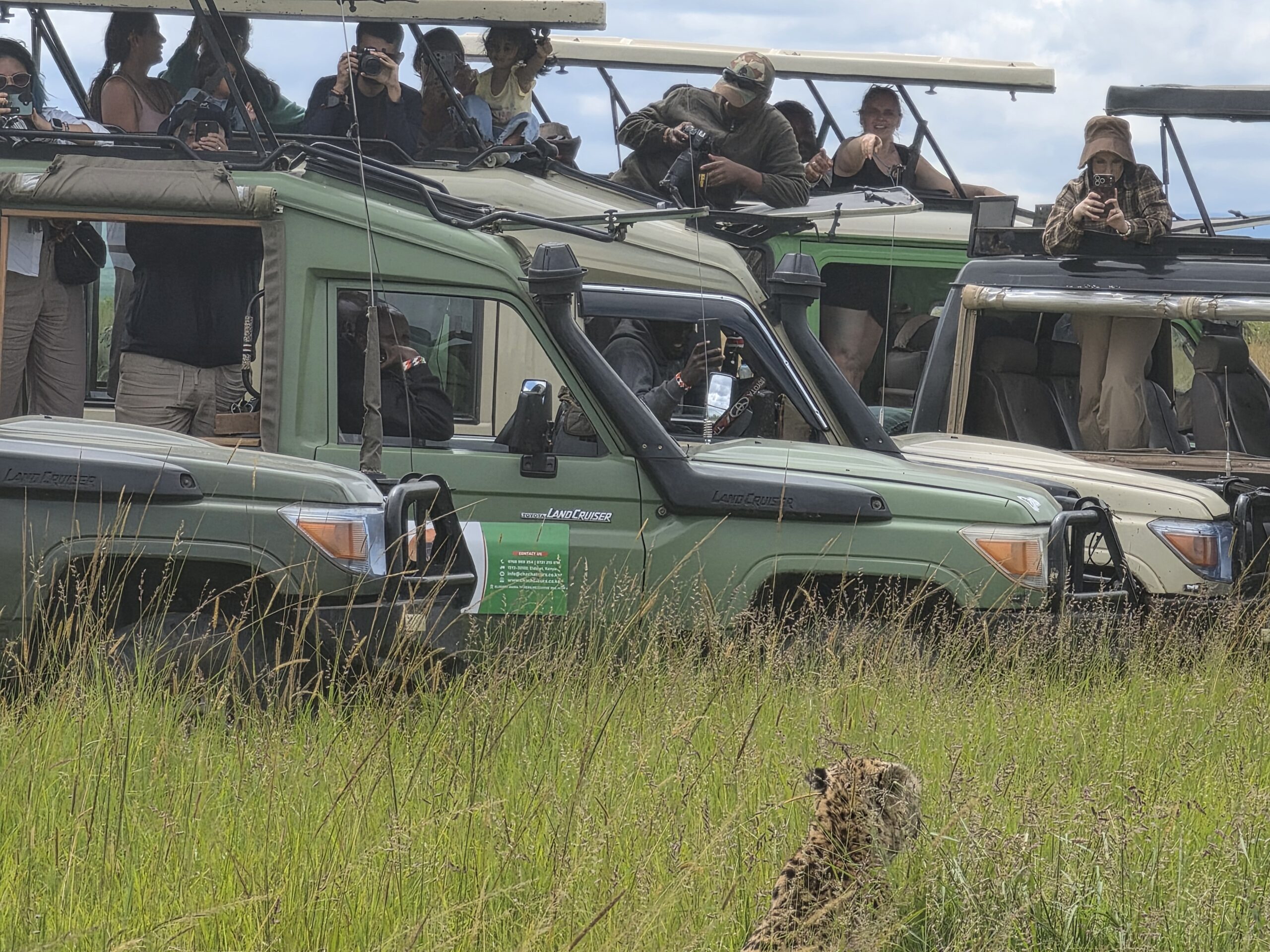
The Mara North Conservancy, on the northern edge of the reserve, offers a different experience. It’s a private conservancy bordering the main reserve, with lower vehicle density and more flexible game-drive rules (including off-road driving and night drives, which aren’t permitted inside the main reserve). While the biggest crossing spectacles are concentrated closer to the river itself, Mara North puts you in excellent position for general migration activity, predator sightings, and a quieter, more exclusive safari experience overall.
Where to Stay: Riverfront Luxury vs. Sopa Lodges
If river-crossing access is your top priority, camps positioned directly along the Mara River give you the shortest possible drive to the action — sometimes just minutes. Governors’ Camp, in the Mara Triangle beside the river, is one of the most famous names for exactly this reason — it’s built right where much of the classic crossing footage is filmed. Camps like this book out six to twelve months in advance for July through September, so early planning is essential.
That said, you don’t need a riverfront camp to see the migration. Properties like Sopa Lodge Maasai Mara are set slightly further from the river but still very much within the ecosystem the herds move through — meaning guests staying there still get outstanding migration viewing of 2026 Mara River crossings on their game drives, often at a more accessible price point than the exclusive riverfront camps. For travelers who want a genuine migration safari without the premium riverfront cost, Sopa Lodge remains an excellent, well-located choice.
For a full pricing comparison across budget tiers, see our Kenya Safari Cost guide.
The Predators That Follow
Wherever the herds go, predators follow — and the migration is as much about them as it is about the wildebeest themselves:
- Nile crocodiles, some of the largest in Africa, lie in wait in the Mara River itself, and take a significant toll during crossings
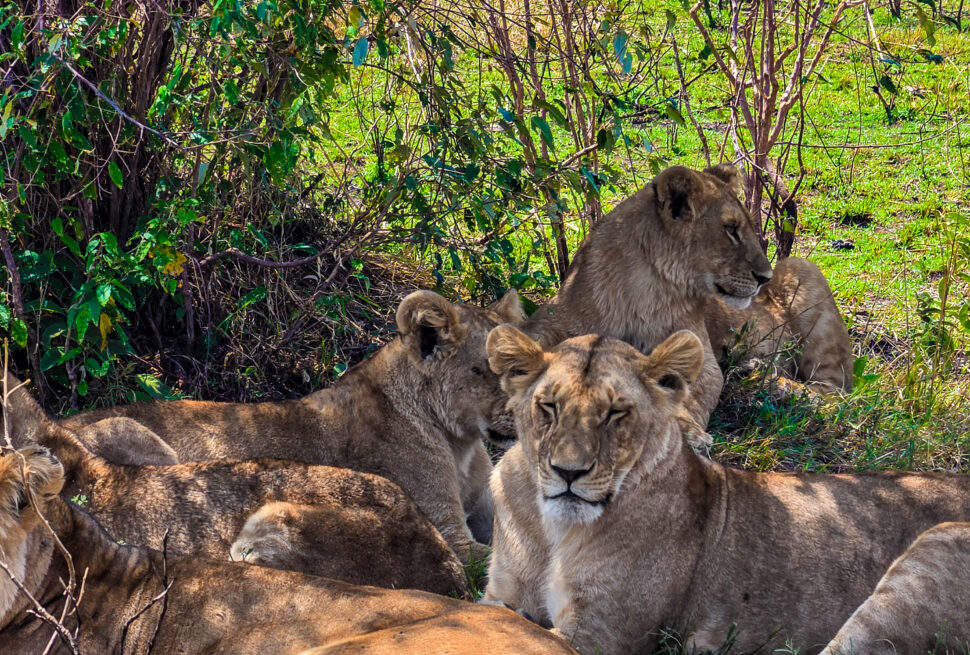
- Lions patrol the plains and riverbanks, taking advantage of the sheer density of prey
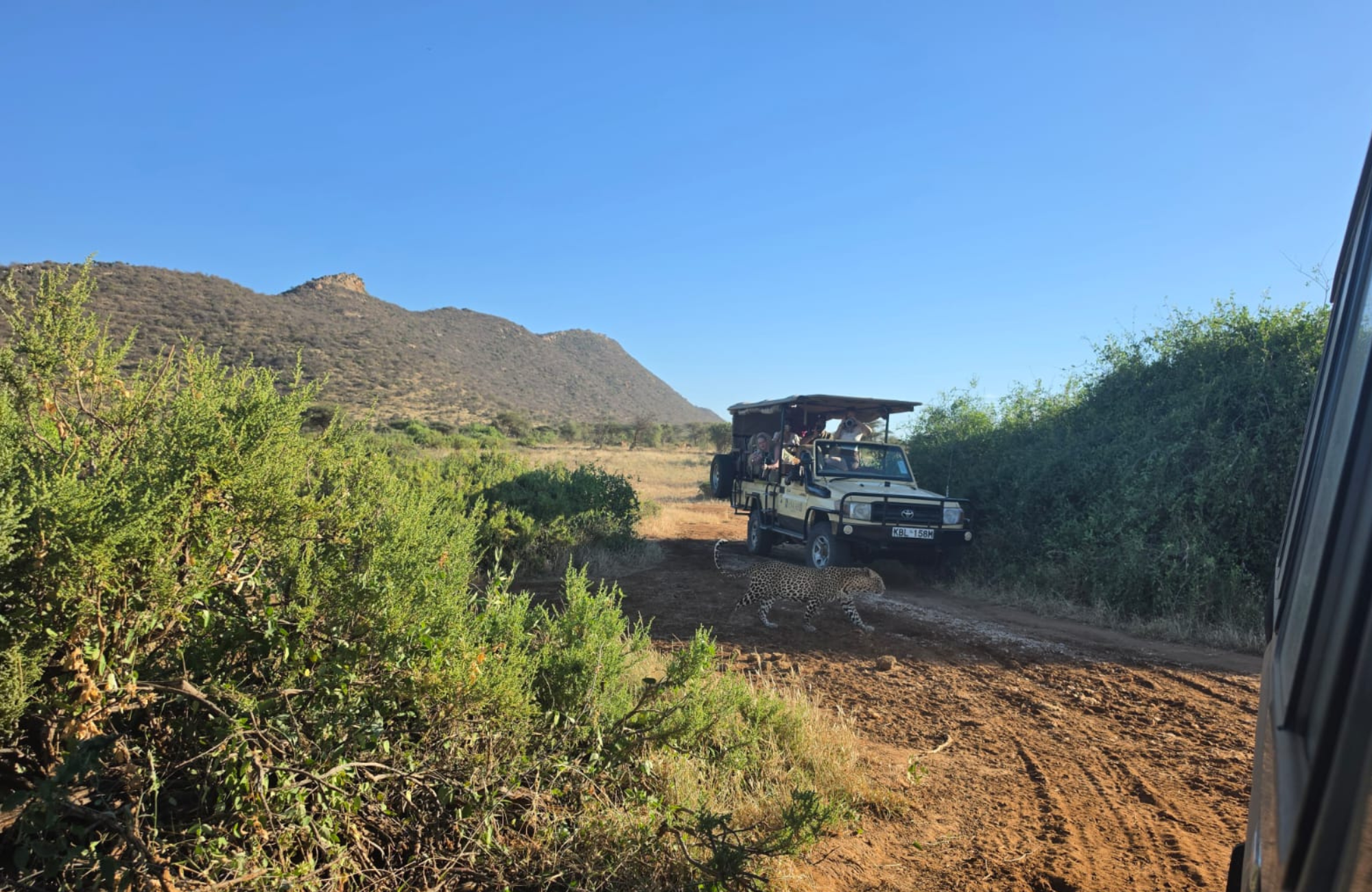
- Cheetahs thrive on the open grasslands, particularly around the plains where wildebeest graze in the thousands
- Hyenas scavenge and hunt opportunistically, especially around weaker calves and crossing chaos
This combination — mass movement, water crossings, and predators working in concert — is exactly why the Mara during migration season is considered one of the greatest wildlife spectacles on the planet.
Ready to Witness the Mara River Crossings Yourself?
The Great Migration doesn’t wait, and neither do the best camps. If you’re planning a 2026 or 2027 safari around the crossings, now is the time to lock in your dates.
At Savanna Sojourns Safaris, we build itineraries around exactly this kind of timing — whether you want to be riverfront in the Mara Triangle or based more affordably at a lodge like Sopa while still catching the herds on your game drives. Check out our 3-Day Maasai Mara Great Migration Safari or our 7-Day Maasai Mara, Lake Nakuru, Ol Pejeta & Samburu Safari to find the right fit for your travel dates, or get in touch for a tailor-made migration safari built around the 2026 Mara River crossings.
Note: river crossings are a natural event and can never be guaranteed on any single day — but with the right timing, location, and a good guide, your odds of witnessing one during July–September are excellent.