
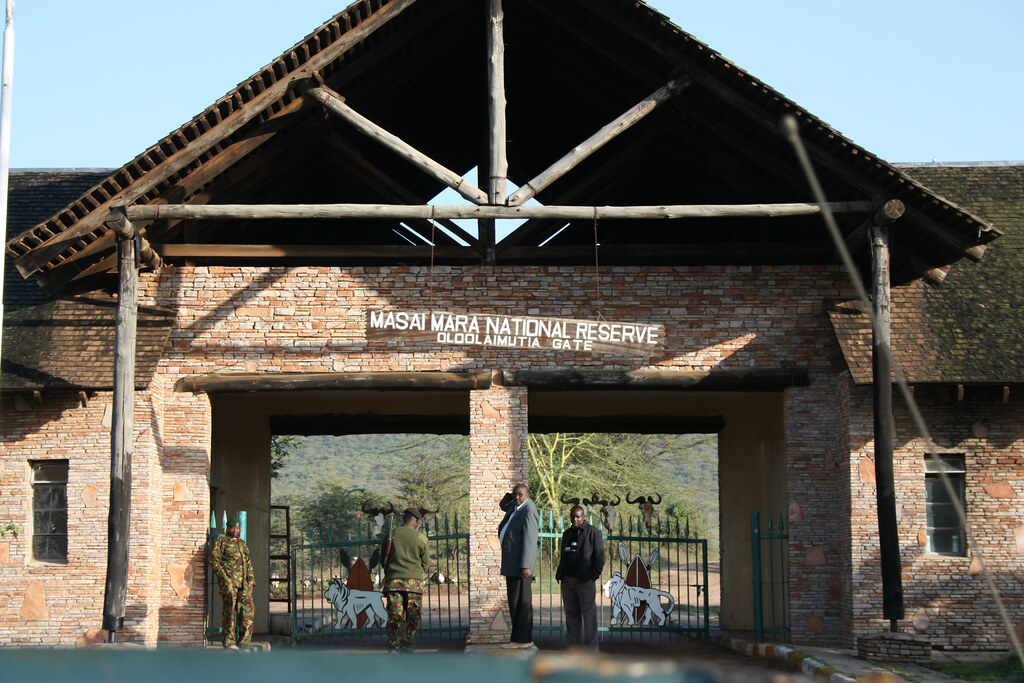
The Masai Mara is one of the few places in Africa where the world still feels ancient. The grasslands stretch toward the horizon, the air vibrates with the calls of birds and the low grumble of grazing herds, and every sunrise paints the reserve in colours that seem to exist only here. Before this wilderness opens itself to you, however, every traveler must pass through one constant checkpoint: the park fees.
For many visitors, park fees are the least understood part of safari planning. They change between seasons, vary depending on your nationality, and shift again depending on whether you stay inside the main reserve or in one of the neighbouring conservancies. But once you understand how these fees work, you gain tremendous control over your itinerary and the final cost of your safari.
If you’re currently planning a trip, this guide gives you everything you need — the full 2026 fees, how they’re charged, what they include, and how to avoid unnecessary extra costs. For itinerary timing, see How Many Days Do You Really Need in the Masai Mara?. For budget-friendly strategies, the companion article Masai Mara on a Budget is essential reading.
1. Masai Mara National Reserve Fees (2026)
These are the official fees charged by Narok County for the main reserve, valid Jan 2026 onward. All park fees are charged per person, per 24-hour cycle.
The Masai Mara National Reserve has three main pricing categories:
- Non-residents (international visitors)
- Residents (East African residents with valid ID/work permit)
- Kenyan citizens
Below is the exact fee breakdown:
| Category | High Season (July–December) | Low Season (January–June) | Who This Applies To |
|---|---|---|---|
| Non-Residents (USD) | 200 per adult / 50 per child | 100 per adult / 50 per child | All international visitors |
| Residents (KES) | 3,000 adult / 1,500 child | 2,000 adult / 1,000 child | East African residents |
| Kenyan Citizens (KES) | 2,000 adult / 1,000 child | 1,000 adult / 500 child | Kenyan citizens with ID |
Why the fees differ
Park fees are structured to support conservation, community benefit, and infrastructure. The Masai Mara receives thousands of international visitors, so non-resident fees are the highest. Kenyan citizens pay subsidised rates under national wildlife policy.
High vs low season explained
- High season (July–December): Peak wildlife density, Great Migration crossings, and excellent weather.
- Low season (January–June): Quieter, greener, wetter months; still excellent wildlife, but fewer crowds.
These seasonal differences allow budget travelers to plan more affordable safaris by targeting early-year months.
Children and infants
- Children: ages 3–11
- Under 3: free for all categories
Families benefit significantly, especially in low season, and the article Masai Mara with Kids explores this in detail.
2. Conservancy Fees (2026)
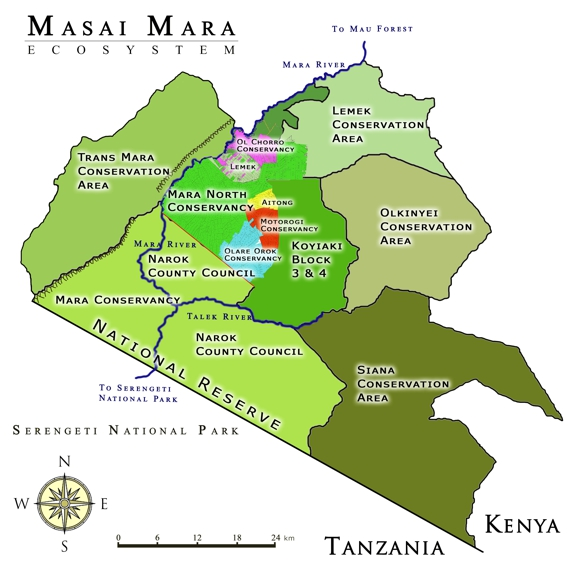
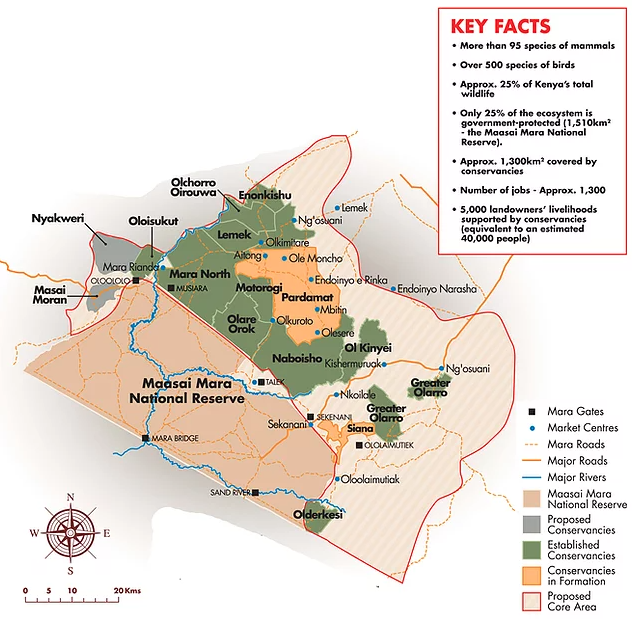
The Masai Mara ecosystem includes several world-class conservancies surrounding the main reserve, such as:
- Olare Motorogi
- Naboisho
- Mara North
- Ol Kinyei
- Lemek
- Enonkishu
- Ol Chorro
- Siana
These conservancies operate under private or community-based management and have their own fee structures.
Average Conservancy Fee (2026)
- USD 100–150 per adult per night
- USD 50–70 per child per night
Conservancy fees are paid through the camp you stay in, not at a gate.
Why conservancy fees are higher
Conservancies limit the number of visitors to protect land and wildlife. The result is a more exclusive experience:
- fewer vehicles around sightings
- better guiding standards
- permission for night drives
- off-road game viewing (crucial for photography)
- community benefit guaranteed to local Maasai landowners
For travellers staying at higher-end properties, conservancies often offer more value than the main reserve itself.
Choosing between the reserve and a conservancy
- If you want action-heavy big cat encounters, the reserve delivers.
- If you prefer quiet landscapes, fewer vehicles, and better photographic positioning, conservancies are unmatched.
For deeper comparisons, see your itinerary and lodge guides:
• Masai Mara Luxury Resorts
• Best Budget Stays in the Masai Mara
3. Additional Charges Travelers Should Expect
Park fees are only one part of safari costs. Here are the other charges travelers may encounter:
a) Vehicle Entry Fees
If you join a tour operator, this is usually included in your safari package.
For self-drive visitors:
- KES 1,000–3,000 per vehicle per day
- Higher for larger vehicles (Land Cruisers vs sedans)
Self-drive travelers should also read:
How to Get to the Masai Mara from Nairobi.
b) Balloon Safari Landing Fee
Hot air balloon safaris charge a USD 30–50 landing fee per person, which supports conservation and local community development.
The balloon experience is one of the most memorable activities in the Mara and is also featured in:
Masai Mara Honeymoon Packages.
c) Public Camping Fees
Public campsites have their own pricing:
- USD 30–40 per person per night (non-residents)
- KES 1,000–2,000 for residents/citizens
Private campsites or seasonal setups often cost more.
d) Camera Equipment Fees
Unlike some African parks, the Masai Mara does not charge extra for cameras or lenses.
But drones are strictly prohibited without special permits from KCAA and county authorities.
4. How to Pay Masai Mara Park Fees (2026)
Gates are mostly cashless. The accepted methods are:
- Credit or debit card
- Mpesa (Kenyan line required)
- Online pre-payment via operator or portal
- Tour operator payment handled on your behalf
The easiest option is always:
Let your safari operator pay in advance.
This reduces delays at the gate, especially in peak season.
5. Rules and Important Policies to Know
Understanding park rules prevents unexpected charges and ensures smoother game drives.
a) Fees are per 24 hours, not per calendar day
Example: Enter at 3 pm Tuesday and leave by 3 pm Wednesday — you pay for one day.
This flexibility helps you structure your drives efficiently.
b) Late exit fees
If you exit even slightly beyond your 24-hour window, you may be charged the full next day fee.
This is especially important for early-morning checkouts.
c) Staying inside vs outside the reserve
Some lodges inside the reserve require guests to pay:
- higher non-resident fees
- higher high-season rates even in shoulder periods
Meanwhile, staying outside the reserve lowers your base cost but requires paying each time you re-enter.
d) Conservancy rules
You cannot use a conservancy fee to enter the main reserve.
Each area has its own permissions.
e) Night drives are prohibited in the main reserve
Only conservancies offer night drives, which is why many photographers favour them.
For photography-focused travelers, see:
Best Photography Spots in the Masai Mara.
6. How Park Fees Influence Your Total Safari Budget
Park fees account for a surprisingly large portion of your safari budget.
For example, a typical 3-day safari includes:
- 3 days of park fees
- 2–3 nights of accommodation
- Vehicle and guide costs
- Transport from Nairobi
- Miscellaneous fees (balloon landing, camping, etc.)
Typical cost distribution on a 3-day trip
Per adult, 2026 averages:
Budget safari: USD 350–550
- Park fees can be 30–45% of the total cost.
Mid-range safari: USD 600–1,000
- Park fees around 20–30%.
Luxury safari: USD 2,000–4,000+
- Park fees only 5–15% because accommodation is premium.
Understanding this helps you plan around seasons.
Traveling in January–June can halve park fees for non-residents — one of the easiest ways to reduce total cost.
For a full financial breakdown, refer to:
Masai Mara Safari Cost Guide.
7. Should You Choose the Reserve or a Conservancy? (2026)
Both offer spectacular wildlife experiences, but the atmosphere differs dramatically.
Masai Mara National Reserve
Best for:
- Great Migration crossings
- Wide-open savannah
- Fast-paced predator action
- First-time safari visitors
The reserve is dramatic, busy, and iconic.
Masai Mara Conservancies
Best for:
- fewer vehicles
- intimate sightings
- night drives
- off-road photography
- eco-friendly, community-focused tourism
Conservancies reward travelers seeking tranquillity and exclusivity.
For those deciding between styles, the article Masai Mara vs Amboseli offers a good landscape contrast.
8. Final Thoughts — Understanding Fees Helps You Shape Your Safari
When you understand park fees, you gain the ability to plan a safari that matches your budget, your style, and your expectations. Whether you choose the reserve for its sweeping plains or the conservancies for their quiet intimacy, every fee contributes to protecting one of Africa’s richest ecosystems.
From lion prides patrolling dawn grasslands to elephants walking across amber light, the Masai Mara rewards every visitor who steps into its world. With fees planned in advance, the rest of your journey becomes what the Mara is meant to be — immersive, thoughtful, and unforgettable.