

Where the Earth Still Breathes Wild
In the early light of dawn, the Masai Mara stirs. Mist curls above the grasses, and the distant rumble of hooves rolls like thunder across the plains. This is not a place of silence or stillness; it is a living heartbeat. Every blade of grass, every predator’s gaze, every flight of bird belongs to a grand design that has unfolded here for millennia. The Mara is not just Kenya’s crown jewel of wildlife; it is one of the last landscapes on Earth where the rhythm of life still moves to nature’s own time.
The Masai Mara National Reserve, together with the surrounding community conservancies, forms the northern reach of the vast Serengeti-Mara ecosystem. It is a wilderness of roughly 25,000 square kilometers that carries the weight of Africa’s ancient memory — a memory of abundance, migration, struggle, and renewal. Within it roam the great herds, the hunters, and the hidden lives that define the African savanna.
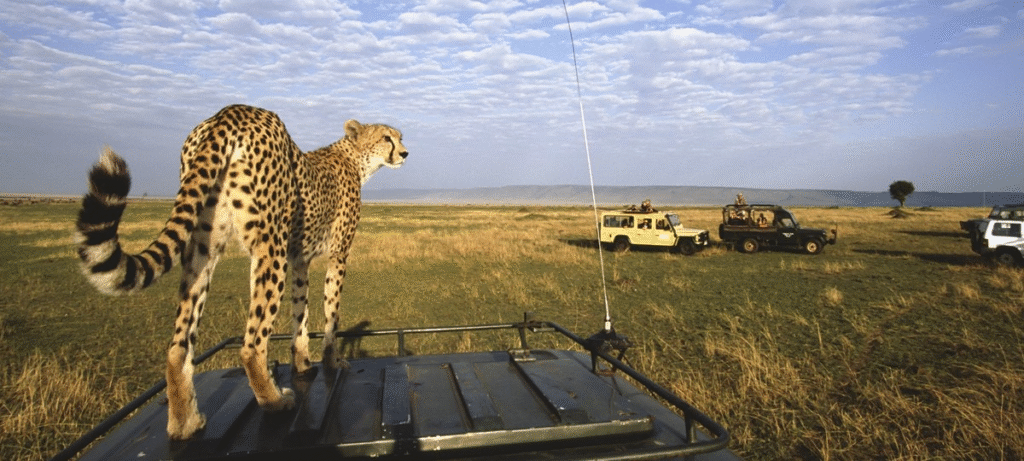
Yet behind its beauty lies a fragile truth. The animals of the Masai Mara face a future balanced on the edge of human progress. How this story ends will depend as much on us — the visitors, the guides, the communities, and the dreamers — as it does on the lions, elephants, and antelope that call it home.
The Great Circle of Life: The Web That Holds the Mara Together
Life in the Masai Mara is built on connection. Every creature, from the tiny termite to the towering elephant, plays a part in keeping the system alive. The plains are dominated by grazers — wildebeest, zebra, Thomson’s and Grant’s gazelles — who move in vast herds across the open grasslands. Their presence feeds everything else.
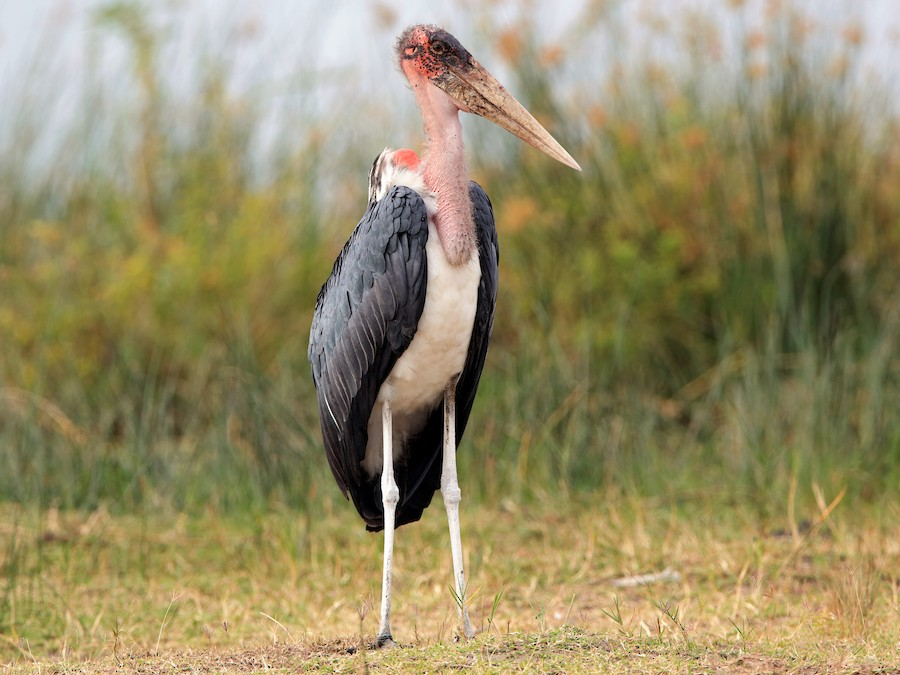
Predators follow in their wake: lions stalking through the golden grass, leopards draped in acacia shade, cheetahs sprinting across open plains, and hyenas echoing their eerie laughter into the night. Around them move the scavengers — vultures, jackals, and marabou storks — each reclaiming what remains. This cycle is neither cruel nor kind; it is balance in its purest form.
Rainfall dictates everything here. When the short rains fall in October and the long rains arrive in April, the grasses burst with new life. Calves and fawns are born by the thousands, their brief innocence fueling the entire ecosystem. When the rains fail, the Mara tightens — predators grow leaner, competition grows harsher, and survival becomes art.
It is within this tension — between feast and famine, predator and prey — that the true essence of the Mara resides. Every dawn promises both life and death, and yet out of that struggle emerges one of the world’s richest expressions of biodiversity.
The Big Five and Beyond: The Icons of the Mara
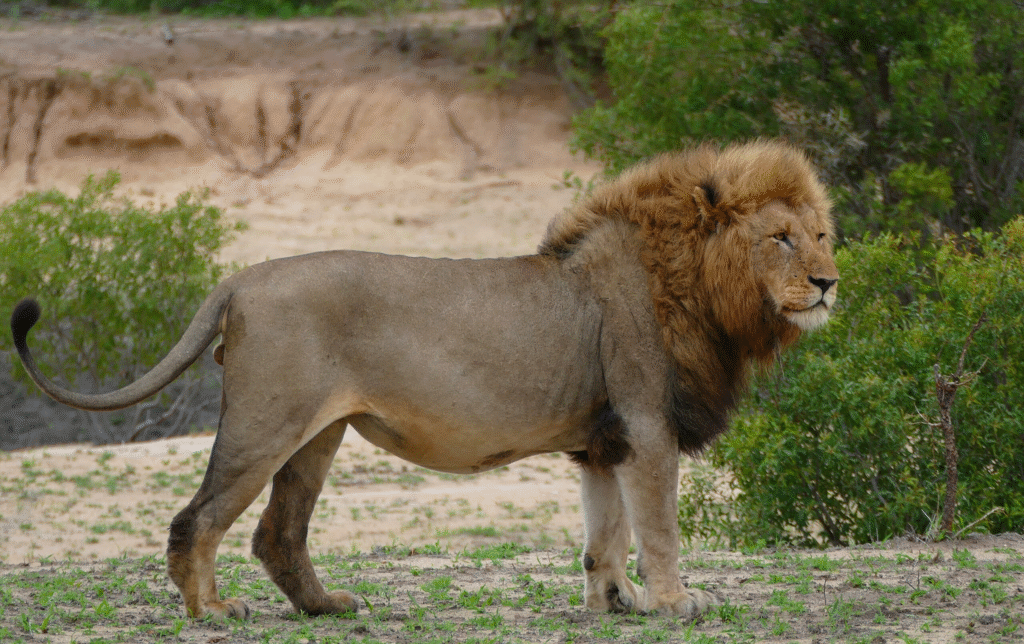
No animal defines the Masai Mara more than the lion — Panthera leo, the undisputed monarch of these plains. To watch a pride at rest beneath a spreading balanite tree is to witness the architecture of social grace. Females groom one another in lazy harmony while cubs tumble through the grass. At dusk, the stillness dissolves; muscles tighten, eyes sharpen, and the hunt begins. Lions of the Mara are among the most photographed animals on Earth, but their reality is more complex: they face constant challenges from hyenas, dwindling territories, and the slow advance of human settlement.
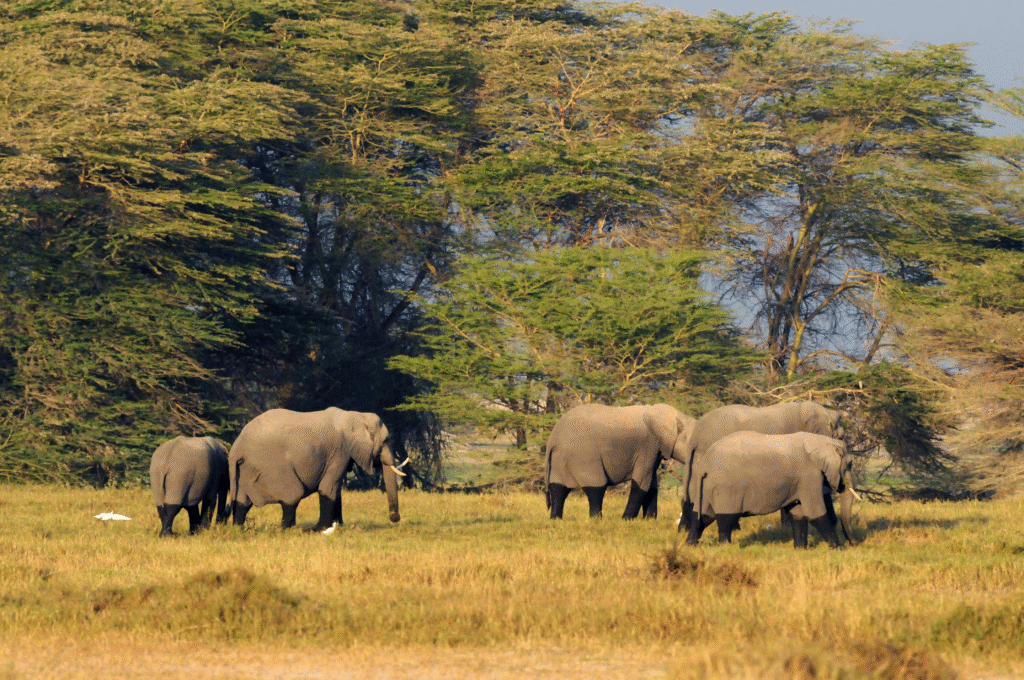
Beside them roam the elephants — Loxodonta africana, architects of the savanna. Their immense feet carve paths through grass and clay; their tusks plow the soil, and their memories trace generations of migration. When matriarchs lead their herds to the Mara River, it is an act guided by knowledge older than any map. They are gardeners of the ecosystem, dispersing seeds and shaping vegetation.
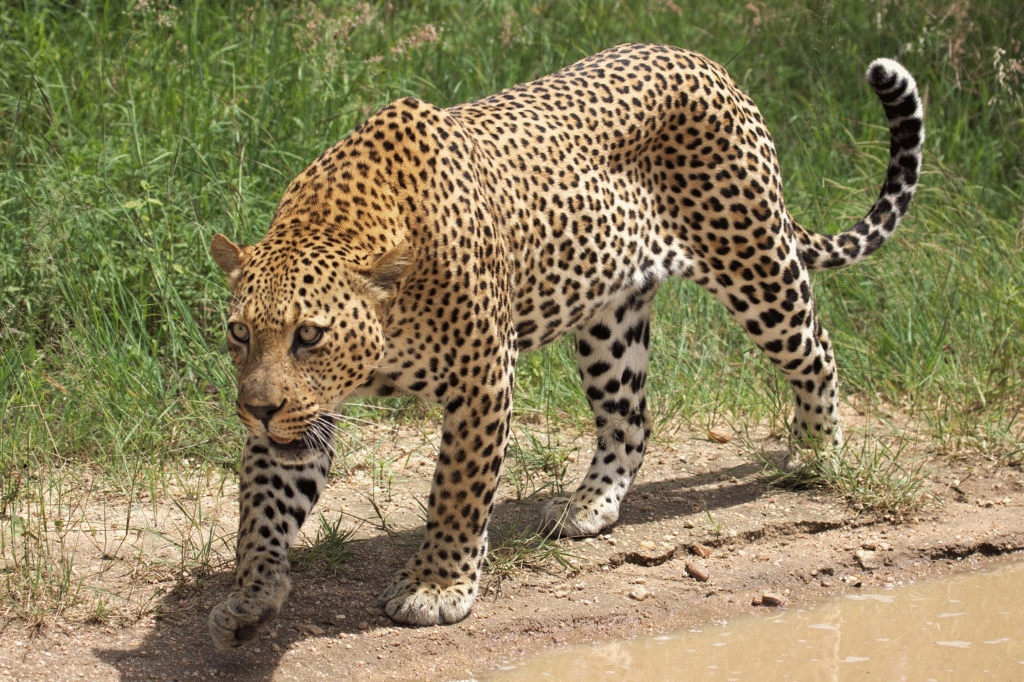
The leopard, Panthera pardus, is the Mara’s secret. Unlike the open-land lions, leopards belong to the half-light — solitary, elusive, often seen only as a flicker of gold against the branches. Their stealth is a reminder that the Mara is not just a place of spectacle but also of mystery.
The rhinoceros, Diceros bicornis, stands as one of the Mara’s most endangered residents. Once abundant across East Africa, black rhinos were hunted to near extinction for their horns. Today, only a small, closely guarded population survives in protected areas within the greater Mara ecosystem. Their pre-dawn silhouettes — stocky, wary, solitary — remind visitors of both the triumph and the tragedy of conservation. Each sighting is a gift earned through decades of effort by rangers who risk their lives daily to shield these ancient grazers from poachers. The rhino’s survival is the Mara’s measure of hope — proof that determined protection can still reverse the course of loss.
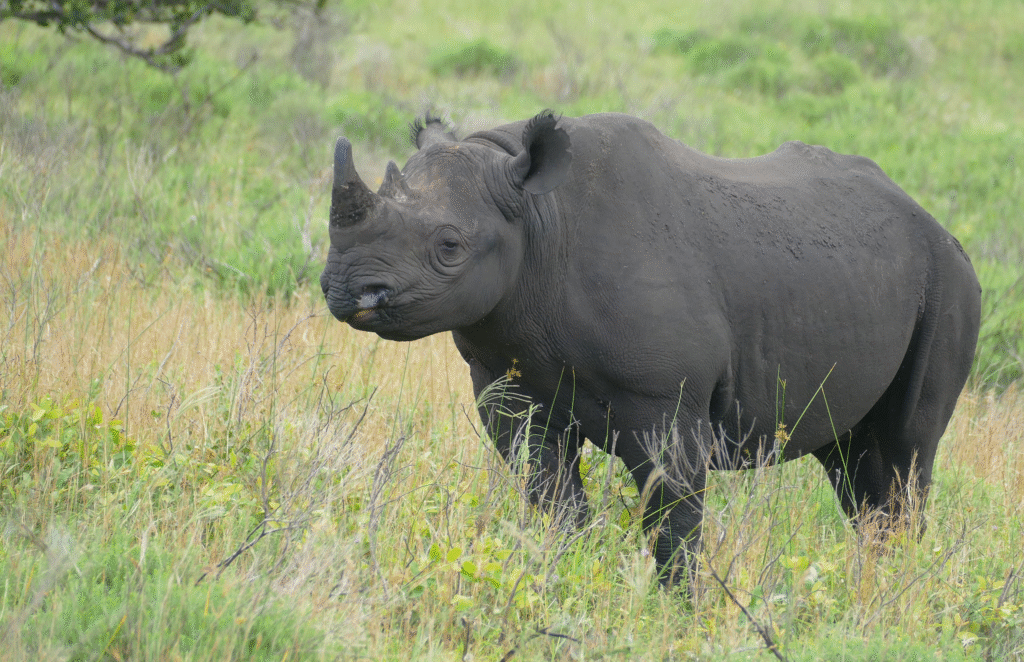
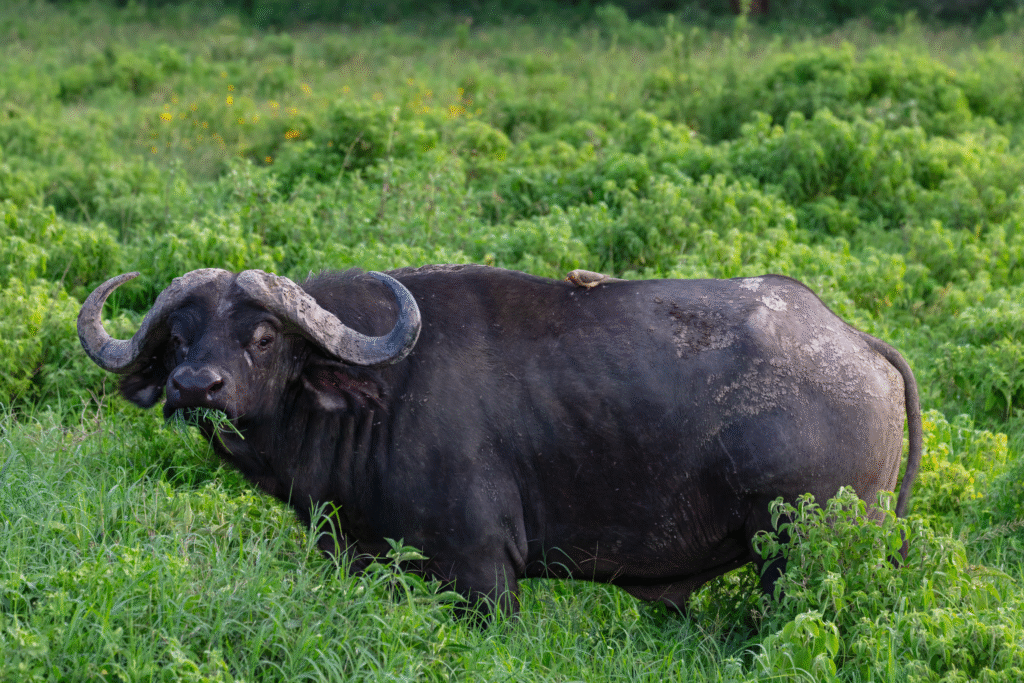
Then there is the buffalo, Syncerus caffer, unpredictable and immense, moving in herds that command respect even from lions. And the rhino — Diceros bicornis, the black rhinoceros — ancient and endangered, its presence now a fragile victory for rangers and conservancies that protect it from the poacher’s bullet. Together, these five form the Big Five: symbols of wild Africa.
But to stop at the Big Five would be to miss the essence of the Mara. The reserve shelters more than ninety species of mammals and over five hundred species of birds. Cheetahs, servals, honey badgers, and mongooses fill the middle tiers of the ecosystem; dik-diks and impalas paint the landscape with motion. Every size, every adaptation tells part of the story of life’s persistence.
Birds, Reptiles, and Hidden Lives
Look up, and the sky itself seems alive. The Masai Mara is not only a realm of lions and elephants — it is a sanctuary of wings. At dawn, the air trembles with song: the liquid calls of weavers building their pendulous nests along the reeds, the sharp whistle of bee-eaters skimming for insects, the distant croak of storks greeting the sunrise.
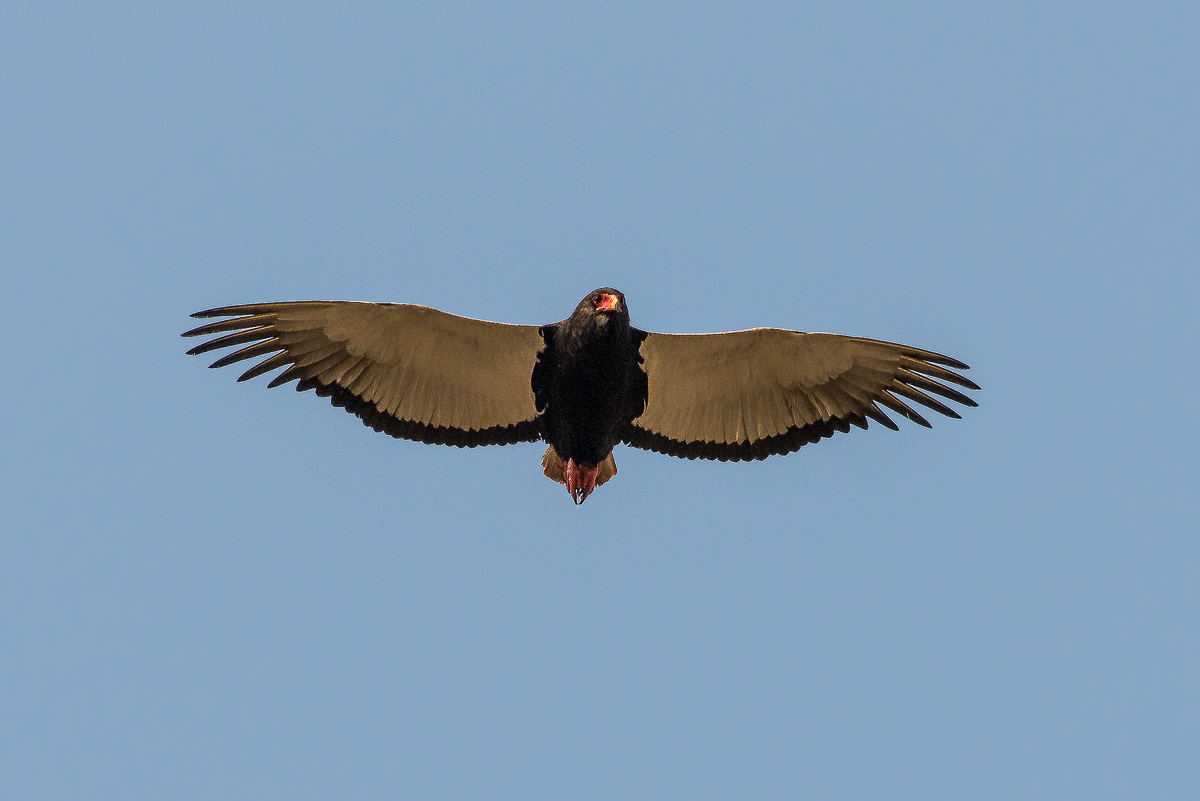
Above it all, raptors reign supreme. Bateleurs glide in endless circles, their bold black-and-crimson wings tilting against the thermals. Tawny eagles perch atop termite mounds, scanning the savanna for the slightest twitch of prey. Vultures — white-backed, lappet-faced, and Rüppell’s griffon — wheel overhead in solemn communion, their patience keeping the plains clean of death’s residue. And when the African fish eagle calls, its piercing cry echoes through the Mara River valleys like a hymn — a sound so distinctly African that it seems to hold the memory of rain and thunder.
Among the wetlands and floodplains, grace takes on other forms. The crowned crane strides with slow majesty through the shallows, its golden crest shimmering in the light. Saddle-billed storks, herons, and ibises gather where the water recedes, sifting for frogs and crustaceans. The secretive African jacana, with its impossibly long toes, walks upon floating lilies as though walking on water itself. In the grasslands, the kori bustard — Africa’s heaviest flying bird — lifts reluctantly into the air, its wings beating like slow applause.
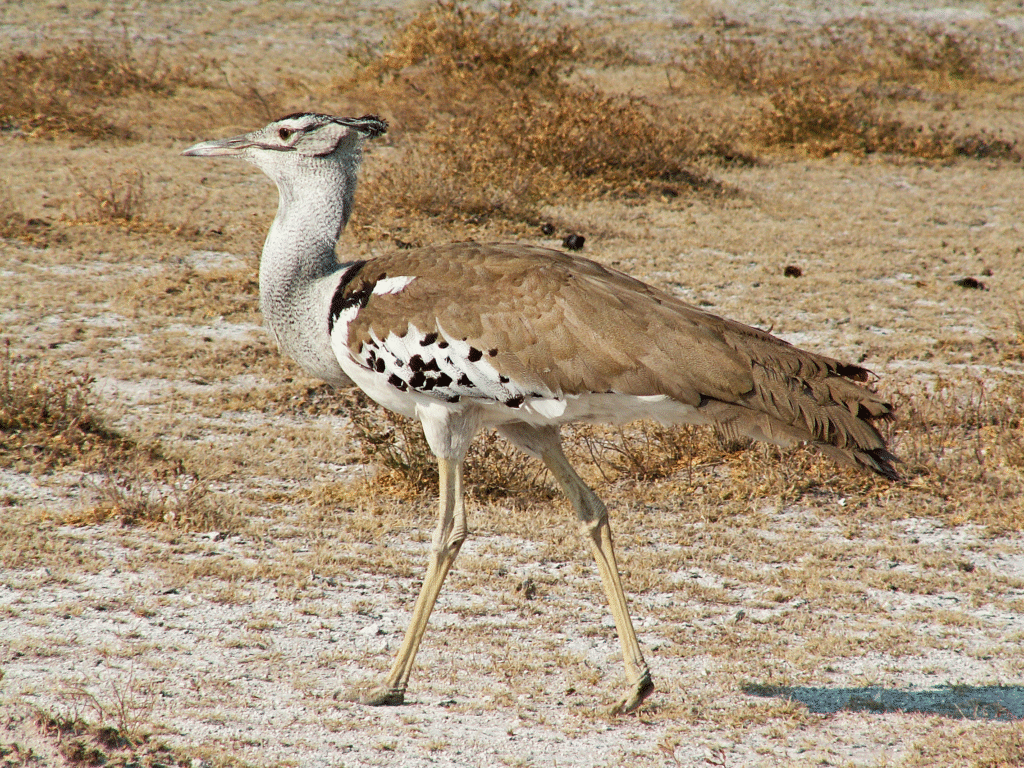
Not all brilliance is in flight. The lilac-breasted roller, with its turquoise and violet feathers, has become the Mara’s unofficial emblem — a small, audacious burst of color against the tawny land. Sunbirds flash like living jewels around flowering acacias; oxpeckers ride on the backs of buffalo and giraffe, feeding on ticks and wounds. Each species performs a task in the quiet arithmetic of balance: pollinating, cleaning, scavenging, warning.
Yet for every bird seen, a dozen more go unnoticed. Owls emerge only after dusk, their calls haunting the acacia woodlands. Nightjars flutter low over the tracks, invisible until caught in the headlights of a safari vehicle. Even in the stillest hours, the Mara breathes through feathers.
Beneath this aerial world moves another realm — the cold-blooded keepers of the earth and water. Along the Mara River, Nile crocodiles bask on the banks like armored relics of a vanished age. Some have lived for decades, their size and patience unmatched. When the migration floods the crossings, they lie in wait, transforming the river into a battleground of instinct. Yet for most of the year, they are silent sentinels, vital to the cleansing of the waterways.
Monitor lizards — both savanna and Nile species — patrol the riverine thickets, their forked tongues tasting the air. Chameleons, perfectly camouflaged, shift colors with the rhythm of light and fear. Skinks dart between roots; geckos cling to lodge walls, their calls echoing softly through the night. Snakes, though rarely seen, complete the story: the harmless spotted bush snake glides through foliage; puff adders lie coiled beneath dry grass; and the black mamba — swift, intelligent, formidable — moves unseen through the scrub.
Each of these creatures performs a task too often uncelebrated. The reptiles control rodents and insects, recycle carrion, and maintain population balance. The birds scatter seeds, spread life from one patch of soil to another, and announce the seasons with their migrations. Together, they are the pulse beneath the spectacle — the quiet workers of the ecosystem.
In the chase for lions, elephants, and wildebeest, most travelers miss this delicate world. But spend a quiet hour by the river or under a fever tree, and you will find the Mara alive in miniature: wings flickering, scales glinting, voices whispering through the heat. These are the unsung keepers of the savanna. Without them, the songs would fall silent, the soil would grow still, and the great web of life that binds the Masai Mara together would slowly unravel.
Mammals of the Masai Mara
| Common Name | Scientific Name |
|---|---|
| Lion | Panthera leo |
| Leopard | Panthera pardus |
| Cheetah | Acinonyx jubatus |
| Serval | Leptailurus serval |
| Caracal | Caracal caracal |
| Wild Cat | Felis sylvestris |
| African Civet | Civettictis civetta |
| Small-spotted Genet | Genetta genetta |
| Large-spotted Genet | Genetta tigrina |
| Spotted Hyena | Crocuta crocuta |
| Aardwolf | Proteles cristata |
| Striped Hyena | Hyena hyaena |
| Dwarf Mongoose | Helogale parvula |
| Banded Mongoose | Mungos mungo |
| Slender Mongoose | Herpestes sanguineus |
| Ichneumon Mongoose | Herpestes ichneumon |
| Marsh Mongoose | Atilax paludinosus |
| White-tailed Mongoose | Ichneumia albicauda |
| Zorilla | Ictonyx striatus |
| Honey Badger | Mellivora capensis |
| Black-backed Jackal | Canis mesomelas |
| Side-striped Jackal | Canis adustus |
| Bat-eared Fox | Otocyon megalotis |
| African Wild Dog | Lycaon pictus |
| Pangolin | Smutsia temminckii |
| Aardvark | Orycteropus afer |
| African Elephant | Loxodonta africana |
| Black Rhinoceros | Diceros bicornis |
| Hippopotamus | Hippopotamus amphibius |
| Warthog | Phacochoerus africanus |
| Plains Zebra | Equus quagga |
| Maasai Giraffe | Giraffa camelopardalis |
| Cape Buffalo | Syncerus caffer |
| Eland | Tragelaphus oryx |
| Greater Kudu | Tragelaphus strepsiceros |
| Bush Duiker | Sylvicapra grimmia |
| Oribi | Ourebia ourebi |
| Kirk’s Dik-dik | Madoqua kirkii |
| Klipspringer | Oreotragus oreotragus |
| Mountain Reedbuck | Redunca fulvorufula |
| Bohor Reedbuck | Redunca redunca |
| Bushbuck | Tragelaphus scriptus |
| Defassa Waterbuck | Kobus ellipsiprymnus |
| Impala | Aepyceros melampus |
| Grant’s Gazelle | Nanger granti |
| Thomson’s Gazelle | Eudorcas thomsonii |
| Coke’s Hartebeest | Alcelaphus buselaphus |
| Topi | Damaliscus lunatus |
| White-bearded Wildebeest | Connochaetes taurinus |
| Cape Hare | Lepus capensis |
| Scrub Hare | Lepus saxatilis |
| Springhare | Pedetes capensis |
| Unstriped Ground Squirrel | Xerus rutilus |
| Striped Ground Squirrel | Xerus erythropus |
| Grass Rat | Arvicanthis niloticus |
| White-bellied Hedgehog | Atelerix albiventris |
| Crested Porcupine | Hystrix cristata |
| Bush Hyrax | Heterohyrax brucei |
| Greater Galago | Otolemur crassicaudatus |
| Lesser Galago | Galago senegalensis |
| Guereza Colobus | Colobus guereza |
| Red-tailed Monkey | Cercopithecus ascanius |
| Blue Monkey | Cercopithecus mitis |
| Vervet Monkey | Chlorocebus pygerythrus |
| Olive Baboon | Papio anubis |
Reptiles of the Masai Mara
| Common Name | Scientific Name |
|---|---|
| Nile Crocodile | Crocodylus niloticus |
| Savanna Monitor | Varanus albigularis |
| Nile Monitor | Varanus niloticus |
| Leopard Tortoise | Geochelone pardalis |
| Helmeted Terrapin | Pelomedusa subrufa |
| Flap-necked Chameleon | Chamaeleo dilepis |
| Striped Skink | Mabuya striata |
| Tropical House Gecko | Hemidactylus mabouia |
| Cape Dwarf Gecko | Lygodactylus capensis |
| Mwanza Flat-headed Agama | Agama mwanzae |
| Blue-headed Tree Agama | Acanthocercus atricollis |
| Black-necked Spitting Cobra | Naja nigricollis |
| Black Mamba | Dendroaspis polylepis |
| Spotted Bush Snake | Philothamnus semivariegatus |
| Velvety-green Night Adder | Causus resimus |
| Puff Adder | Bitis arietans |
| African Rock Python | Python natalensis |
Birds of the Masai Mara (selection of key species)
| Common Name | Scientific Name |
|---|---|
| Ostrich | Struthio camelus |
| Secretarybird | Sagittarius serpentarius |
| Grey Crowned Crane | Balearica regulorum |
| Kori Bustard | Ardeotis kori |
| Black-bellied Bustard | Lissotis melanogaster |
| White Stork | Ciconia ciconia |
| Abdim’s Stork | Ciconia abdimii |
| Saddle-billed Stork | Ephippiorhynchus senegalensis |
| Marabou Stork | Leptoptilos crumenifer |
| Rüppell’s Vulture | Gyps rueppelli |
| White-backed Vulture | Gyps africanus |
| Lappet-faced Vulture | Torgos tracheliotos |
| Martial Eagle | Polemaetus bellicosus |
| Bateleur | Terathopius ecaudatus |
| Tawny Eagle | Aquila rapax |
| Augur Buzzard | Buteo augur |
| African Fish Eagle | Haliaeetus vocifer |
| Hamerkop | Scopus umbretta |
| Spur-winged Goose | Plectropterus gambensis |
| Egyptian Goose | Alopochen aegyptiaca |
| African Jacana | Actophilornis africanus |
| Black Crake | Amaurornis flavirostra |
| Giant Kingfisher | Megaceryle maxima |
| Malachite Kingfisher | Corythornis cristatus |
| Pied Kingfisher | Ceryle rudis |
| Lilac-breasted Roller | Coracias caudatus |
| Red-billed Oxpecker | Buphagus erythrorhynchus |
| Yellow-billed Oxpecker | Buphagus africanus |
| Yellow-throated Longclaw | Macronyx croceus |
| Rufous-naped Lark | Mirafra africana |
| Rosy-breasted Longclaw | Macronyx ameliae |
| Jackson’s Widowbird | Euplectes jacksoni |
| African Grey Hornbill | Tockus nasutus |
| Bare-faced Go-away-bird | Corythaixoides personatus |
| Laughing Dove | Spilopelia senegalensis |
| Speckled Pigeon | Columba guinea |
The Great Migration: Nature’s Grandest Show
Each year, an event of almost unimaginable scale unfolds — the Great Wildebeest Migration. From the plains of Tanzania’s Serengeti, over 1.5 million wildebeest and hundreds of thousands of zebras and gazelles begin their long journey north, following the scent of rain and fresh grass. When they reach the Mara around July, the land trembles beneath their hooves.
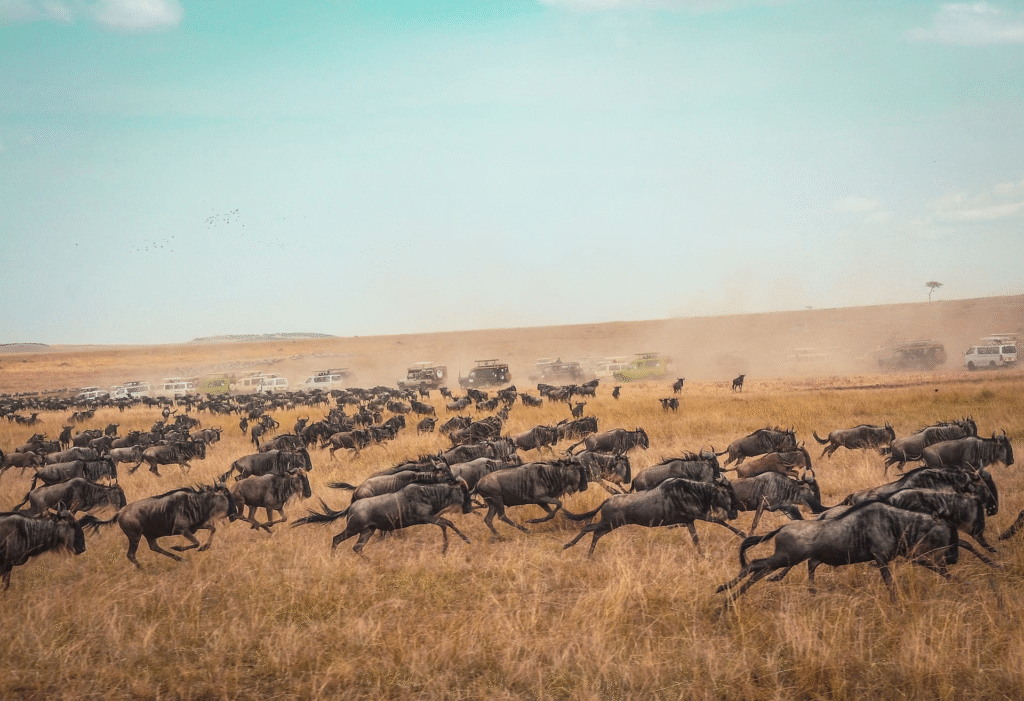
The Mara River stands as their greatest obstacle. Its waters conceal crocodiles the size of canoes, waiting in still patience. On the banks, lions lie in ambush. The crossings are chaos and courage intertwined — a testament to the will of life itself. Many do not survive; yet the migration continues, driven by instincts older than history.
For tourists, this is one of nature’s greatest spectacles. For the Mara’s predators, it is survival. For the ecosystem, it is renewal. The herds’ grazing rejuvenates the grasslands; their waste enriches the soil. When they move south again in October, they leave behind a landscape reshaped by their passage — a living pulse that has beaten for countless generations.
Pressures on Paradise: The Threats Facing the Mara
But the balance is fragile. Every year, the boundaries of the wild inch closer to the plow, the fence, and the road. The Mara’s animals live under pressure from all sides — poaching, habitat loss, drought, and the heavy footprint of mass tourism.
Poaching, though reduced, has not vanished. Rhinos and elephants still fall to the illegal trade in horn and ivory. Even lions suffer, targeted in retaliatory killings when they prey on livestock grazing too close to the reserve’s edge.
Climate change brings new uncertainty. Rains arrive late or not at all. Rivers shrink, grasslands parch, and the great migrations shift in rhythm. The once-predictable calendar of life begins to blur.
And then there is tourism — the Mara’s greatest source of protection and its greatest risk. Each year, more vehicles crowd the plains, chasing the same cheetah or blocking a lion’s path to hunt. The same industry that funds conservation can, if unchecked, erode the very experience it depends upon.
To understand the future of the Mara is to confront this paradox: the animals need tourism to survive, yet they must survive in spite of tourism.
The Rise of Conservancies: A New Model of Protection
Hope, however, is not lost. Over the past two decades, a quiet revolution has taken root along the reserve’s borders — the rise of community-run conservancies. These private conservation areas, such as Olare Motorogi, Naboisho, Mara North, and Ol Kinyei, now protect vast tracts of land that once lay unguarded.
Here, local Maasai families lease their ancestral lands to conservation organizations or eco-lodges. In return, they receive steady income, education opportunities, and employment as rangers, guides, and lodge staff. The arrangement transforms wildlife from a burden — one that trampled crops and killed cattle — into a shared asset.
Within these conservancies, the pressure of mass tourism is eased. Vehicle numbers are limited, ensuring a more intimate and less intrusive experience. Wildlife moves freely across boundaries, unhindered by fences. The result is one of the most successful examples of community-based conservation in Africa — proof that coexistence is not only possible but profitable.
As the Maasai themselves often say, “Wildlife is our wealth.” Their stewardship has become the Mara’s quiet salvation.
Responsible Tourism: How Travelers Shape the Future
Every traveler who sets foot in the Masai Mara becomes part of its story. The choices made — where to stay, how to travel, what to photograph — ripple far beyond a single trip.
The most sustainable lodges today operate on solar power, manage water responsibly, and support local schools and health projects. They employ guides born and raised in the surrounding villages, ensuring that revenue circulates within the community. These are the places that keep the spirit of responsible tourism alive.
Visitors, too, hold power. Respecting wildlife distances, limiting vehicle numbers at sightings, and choosing eco-certified operators all help reduce strain on the ecosystem. Carrying reusable water bottles instead of plastic, supporting community crafts, and tipping guides fairly are small actions that build into lasting impact.
Perhaps most importantly, travelers can lend their voices. Sharing real stories of conservation, donating to ranger programs, or simply encouraging others to visit responsibly keeps global attention fixed on the Mara’s fate.
In the end, responsible tourism is not about denying oneself an adventure; it is about ensuring that adventure remains possible for the next generation.
The Eternal Mara: A Future Worth Fighting For
As the sun sinks over the Oloololo Escarpment, the plains turn to gold. Wildebeest move like a shadowed tide; elephants thread their way toward the river; a lone bateleur drifts in widening circles above the horizon. In this hour between day and night, the Mara reveals its truth: it endures only because everything within it — and everyone who cares for it — remains in delicate balance.
The animals of the Masai Mara are not mere attractions. They are the keepers of an ancient rhythm that still pulses through the African wild. To protect them is to protect a living history written in hoofprints, flight paths, and roars that echo across the years.
For the traveler, the Mara offers more than photographs. It offers perspective — a reminder that we belong not above nature but within it. Every safari, every whispered encounter at dawn, every choice to tread lightly adds another stitch to the fabric of preservation.
If the world still has a wild heart, it beats here — in the shadow of acacias, beside the slow curve of the Mara River, where life and time continue their endless dance. And as long as the herds still move, the lions still call, and the wind still hums through the grass, the spirit of the Masai Mara will endure.
Safari njema. May your journey be good — and gentle.