
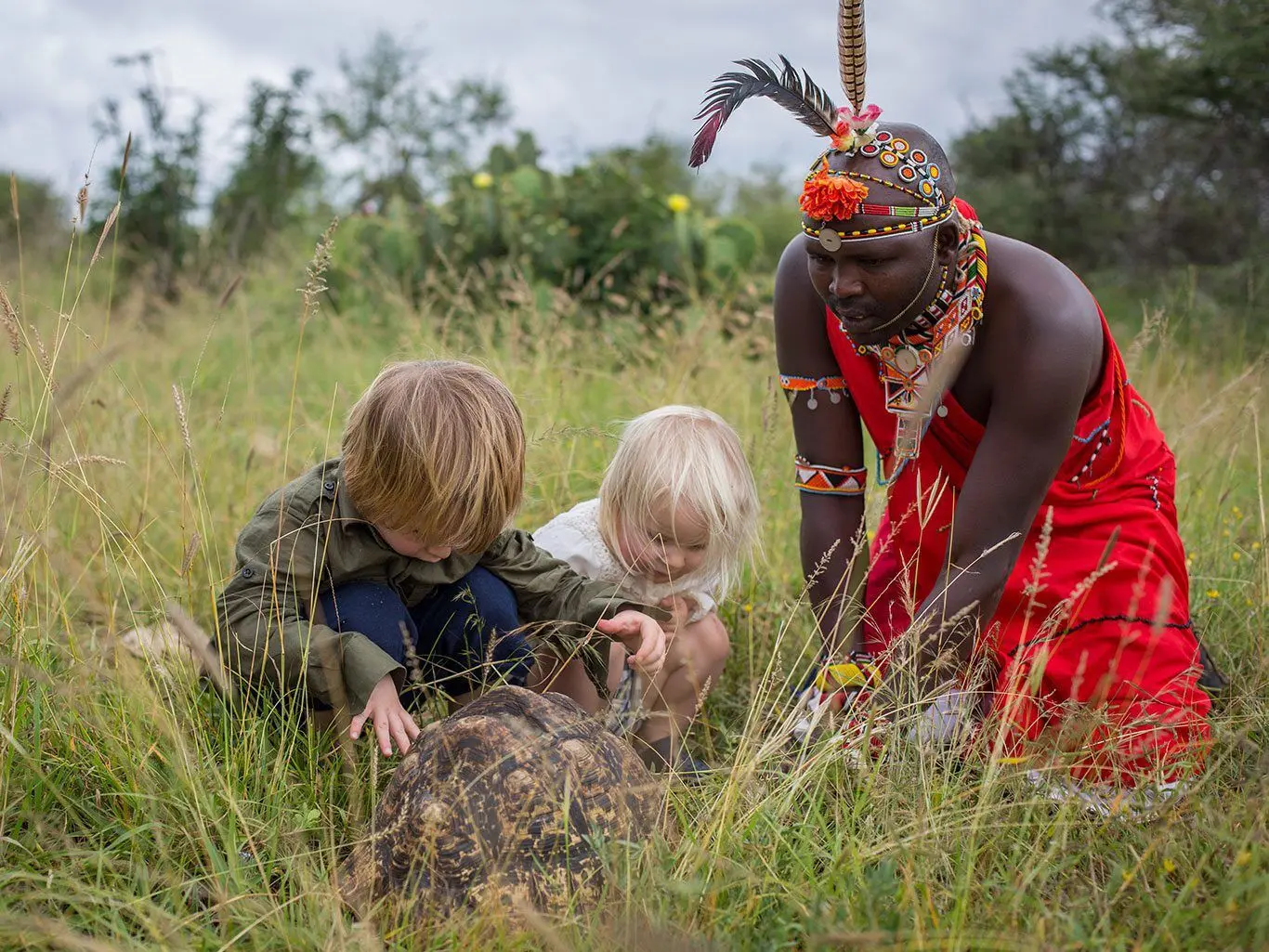
Taking children on safari in the Masai Mara can be one of those trips they remember for the rest of their lives. It can also be exhausting, expensive, and stressful if you do not plan around their ages, attention spans, and safety.
This guide walks you through everything you need to know about visiting the Masai Mara with kids in 2026: age limits, safety, best time to go, how many days to stay, and which types of camps work best for families. It also points you to related guides on costs, packing, and where to stay so you are not guessing.
For overall trip budgeting, start with Masai Mara Kenya Safari Cost: Your Complete Guide. For saving money without cutting quality, see Masai Mara on a Budget: Affordable Safari Tips for 2026 Travelers.
1. Is the Masai Mara suitable for kids?
Yes, the Masai Mara is suitable for children, but not all lodges, vehicles, or itineraries are designed with kids in mind. The experience is very different for:
- A baby or toddler
- A 4–7 year old
- An older child or teenager
The key is to match:
- Age to activities
- Camp type to your family’s needs
- Length of stay to your kids’ patience
Before you decide, it is useful to understand how seasons affect conditions. For that, see Best Time to Visit Masai Mara Kenya and The Seasons of the Masai Mara.
2. Age limits and rules: park, game drives, balloons, and walks
There is no single universal age policy for the Masai Mara. Instead, age limits are set by:
- Individual lodges and camps
- Tour operators
- Balloon companies
- Walking safari providers
Below are typical ranges you should expect. Always confirm exact rules with your lodge or operator before you book.
2.1. Park entry and staying inside the reserve
- Babies, toddlers, and children are allowed in the reserve.
- The main restriction is not park entry itself but whether lodges and vehicles accept very young children.
Many camps will allow babies and toddlers in camp but may:
- Require a private vehicle for game drives
- Restrict very young kids from some activities
2.2. Game drives with kids
Typical patterns:
- 0–2 years
- Many lodges require a private vehicle if you bring a baby or very young toddler on drives.
- Some may recommend keeping them in camp during long drives, especially early mornings and late evenings.
- 3–5 years
- Often allowed on shorter, slower game drives, especially mid-morning.
- May still require a private vehicle so that your child’s needs do not affect other guests.
- 6–11 years
- Usually allowed on most shared game drives.
- Some lodges run special family drives with a more relaxed pace and more frequent breaks.
- 12+ years
- Usually treated as adults for most activities and drives.
If you already know you are bringing younger children, it is safer to assume you will need either:
- A private vehicle, or
- A family-friendly camp that advertises structured children’s activities and flexible game drive rules.
2.3. Hot air balloon safari age limits
Hot air balloon safaris in the Masai Mara are heavily regulated for safety.
Typical guidelines:
- Minimum age is often 7–8 years, sometimes 6+ if the child is tall enough to see over the basket.
- Children must be able to stand unassisted for the duration of the flight.
Balloon flights are early (pickup around 4:30–5:00 a.m.), so you must also consider whether your child can handle a very early start and cold dawn temperatures.
2.4. Walking safaris and bush walks
Most proper walking safaris have higher minimum age limits due to safety and concentration requirements.
Typical patterns:
- Short, gentle “bush walks” within camp or very close by: often from 8–12 years, depending on the lodge.
- Full walking safaris in big wildlife areas: commonly 12–16+ years minimum.
Many family camps offer “kids’ nature walks” as a softer, supervised version. Always ask how far they go, what wildlife is expected, and how many staff accompany the group.
2.5. Cultural visits and village experiences
Cultural visits to Maasai villages are usually open to all ages.
- Young children are welcome.
- These activities are usually short, interactive, and not physically demanding.
They are often a highlight for kids because they involve dancing, singing, and seeing other children.
3. Best time to visit the Masai Mara with kids

The “best” time with children is not always the same as the absolute peak wildlife time. You should consider:
- Weather
- Road conditions
- Crowds
- School holidays
Your detailed base reference remains Best Time to Visit Masai Mara Kenya, but here is a family-focused summary.
3.1. Dry seasons (July–October, January–March)
Pros:
- Drier roads (easier on kids prone to motion sickness)
- Less mud and rain interruptions
- Good visibility for wildlife
Cons:
- July–October is peak season, so higher prices and more vehicles.
- Early mornings and evenings can be cold for smaller children.
This is often the preferred time for families who want the most predictable weather and very strong wildlife viewing.
3.2. Shoulder and green seasons (November, December, April–June)
Pros:
- Lower prices on flights and accommodation
- Fewer vehicles at sightings
- Greener landscapes
Cons:
- Rain can disrupt game drives, especially with younger kids
- Some roads become muddy and slow
- Humidity can be higher
For families focused on value and quieter sightings, early December and some parts of April or June can work well, as long as you are prepared for possible showers.
4. How many days do you really need with kids?
Children get tired faster than adults, especially on bumpy roads and early wake-ups. For a detailed overall breakdown, see How Many Days Do You Really Need in the Masai Mara?.
Family-specific guidance:
- With toddlers and under-5s:
- 2 nights is often enough.
- Plan 2–3 relaxed game drives, not every possible outing.
- With 6–11-year-olds:
- 3 nights is ideal.
- You have time for multiple drives, a village visit, and some lodge downtime.
- With teenagers:
- 3–4 nights works very well.
- Older kids can handle more early mornings and longer drives.
Pushing to 5+ nights in the Mara with younger kids is usually only a good idea if you mix in different activities, rest time, and possibly another region (like Nairobi or a coastal break).
5. Safety in the Masai Mara with children
Safety has three main layers: around wildlife, in vehicles, and in camp.
5.1. Wildlife safety basics
Key rules children must understand:
- Do not stand up, shout, or lean out of the vehicle
- Do not run or wander around camps unsupervised
- Always follow guide and lodge instructions
Most incidents are avoided simply by keeping kids close and not letting them treat the bush like a playground.
5.2. Vehicle safety
- Ask your operator in advance about car seats if you have very young children. Many do not provide them by default, so you may need to bring your own.
- Insist that children stay seated while the vehicle is moving.
- For younger kids, shorter game drives (1.5–2 hours) often work better than full 3–4 hour drives.
5.3. In-camp safety
Most camps are unfenced or partially fenced. This means:
- Children should not walk alone at night or early morning.
- Camp staff usually escort you to and from your tent after dark.
- Pools must be watched closely; lifeguards are not common.
Make sure your lodge understands that you are traveling with children and ask them explicitly:
- How safe is it to move around camp?
- Are there any steep drops, open water, or unfenced areas right next to rooms?
6. Health considerations (simple, parent-focused)
Health advice should always be confirmed with a doctor or travel clinic, but there are a few general points for planning.
- The Masai Mara is in a malaria area. Families should speak to a doctor about malaria prevention suitable for children.
- Some travelers may need yellow fever vaccination depending on their country of origin or transit; this changes over time, so always check the latest government advice.
- Basic precautions help a lot:
- Use insect repellent approved for children.
- Dress kids in long sleeves and trousers in the evening.
- Pack sunscreen, hats, and any regular medication.
Your packing framework is already set out in What to Pack for a Masai Mara Safari. You can easily adapt that list for children by adding:
- Child-friendly medicine
- Snacks
- Small activities for downtime (colouring, books, cards).
7. Getting to the Masai Mara with kids: road vs flight
You already have a detailed logistics guide in your article on how to get to the Masai Mara from Nairobi, but here is the family-specific version.
7.1. Driving with kids
- 5–6 hours from Nairobi by road
- Last stretch can be bumpy, which may be tough on toddlers or anyone with motion sickness
- Good option for older kids and teens who can handle longer journeys
Driving is usually cheaper, which helps families. To understand overall savings, compare this with your cost breakdown in Masai Mara on a Budget.
7.2. Flying with kids
- 45–50 minutes from Wilson Airport to the Mara airstrips
- Much easier on small children
- More expensive but saves energy and time
For already stretched parents, flying one way and driving the other (for example, fly into the Mara and drive out) can be a good compromise.
For guidance on choosing flights and airstrips, pair this article with your flights guide once it is live, and with Top 10 Lodges in the Masai Mara so families can match airstrips to camps.
8. Best family-friendly camps and lodges (mid-range and luxury)
You chose to focus on mid-range and luxury rather than budget for this article. Budget stays are already covered in Best Budget Stays in the Masai Mara, which some families can still use.
When looking for a family-friendly camp, prioritise:
- Family tents or interconnecting rooms
- Flexible mealtimes and child menus
- Willingness to shorten or customise game drives
- Presence of a pool or safe play area
- Clear policies on minimum ages and shared vehicles
From your existing content and cluster, here is how to position options (you do not need to list every property, just use these as examples and build out later):
8.1. Mid-range family choices
These are usually larger lodges or classic safari hotels that work well for families:
- Lodges with pools and spacious grounds
- Multiple room categories, including triples and family rooms
- Structured mealtimes and buffet options (easier for kids)
This category fits naturally under your broader accommodation coverage in Top 10 Lodges in the Masai Mara.
8.2. Luxury family camps
Some high-end camps and resorts are explicitly family-focused. They often offer:
- Dedicated family tents or suites
- “Junior ranger” or kids’ bush programmes
- Activity packs or guided nature walks for children
- Option to have a private vehicle included or available at a supplement
For your internal linking, this section should point to Masai Mara Luxury Resorts, framing it as the place where parents can shortlist specific properties and then check each one’s child policy.
9. Example family itineraries
These are suggested patterns you can reference in your packages content, especially in Best Masai Mara Safari Packages From Nairobi.
9.1. Two-night family safari (younger kids)
- Day 1: Travel to the Mara, short afternoon game drive
- Day 2: Morning drive, midday lodge time (pool, rest), short late-afternoon drive
- Day 3: Relaxed breakfast, optional short activity, travel back
9.2. Three-night family safari (6–11 years)
- Day 1: Travel, afternoon game drive
- Day 2: Morning drive, afternoon village visit, early night
- Day 3: Flexible day: choose between long morning drive, balloon (if age-appropriate), or lodge-based activities
- Day 4: Depart after breakfast
9.3. Three to four nights (teens)
- Combine classic game drives with:
- A balloon safari (if age and budget allow)
- A longer day out with a picnic in the reserve
- A visit to a Maasai community
- Optional photography focus if they are interested
You can cross-link these suggestions with your planned or existing photography guide and your general Animals of the Masai Mara article to inspire older kids.
10. Costs: planning a family safari budget
A family trip is more than just per-person safari prices. You have to consider:
- Extra beds or family room surcharges
- Flight costs multiplied by 3–5 people
- Private vehicle supplements
- Balloon safari costs times everyone old enough to go
- Transfers, park fees, and tips
Your main reference point should remain Masai Mara Kenya Safari Cost: Your Complete Guide. For families trying to control costs:
- Travel in shoulder seasons rather than peak migration weeks
- Look for kids’ discounts on accommodation and flights
- Consider shared vehicles if your children are older and can handle a normal schedule
- Mix one or two luxury nights with moderately priced nights, rather than going fully high-end
And always compare your planned DIY costs with the offers in Best Masai Mara Safari Packages From Nairobi. Sometimes a package is cheaper and simpler for families than booking everything separately.
11. Final thoughts
The Masai Mara can be a fantastic destination for children when you match the experience to their age and energy. The main decisions are:
- When to go
- How many days to stay
- Whether to drive or fly
- Which camp to choose
- Which activities are safe and suitable
Use your existing guides on Best Time to Visit Masai Mara Kenya, Masai Mara on a Budget, Top 10 Lodges in the Masai Mara, and Masai Mara Luxury Resorts as the backbone of this family article. Together, they give parents everything they need to plan a safe, age-appropriate, and memorable safari for their children.
FAQ: Masai Mara with Kids (Quick Answers for Parents)
Is the Masai Mara safe for children?
Yes, the Masai Mara is safe for children when you choose a family-friendly camp and follow standard wildlife precautions. Children should never walk alone, especially at night. Camps escort guests after dark, and guides closely manage behaviour on game drives.
What is the minimum age for a Masai Mara safari?
There is no minimum age for entering the reserve, but individual lodges set their own child policies. Many camps accept babies and toddlers but may require a private vehicle for safety and comfort.
What age can children go on game drives?
Children aged 3–5 usually join shorter, slower drives; under 3s often require a private vehicle. Most shared drives allow children from about 6 years onward. Always check with your lodge.
What age is allowed for hot air balloon safaris?
Most balloon operators require children to be at least 7–8 years old, depending on height and ability to stand for the full flight.
Can toddlers go on safari?
Yes, but itineraries need to be adjusted. Shorter drives, mid-morning departures, and family-centric lodges make a big difference. A private vehicle is often necessary.
What is the best time to visit the Masai Mara with kids?
The dry seasons (January–March and July–October) offer smoother logistics and predictable weather, which is easier for children. Early December is also good for families seeking lower prices.
How many days should you spend in the Masai Mara with kids?
Two nights works for toddlers; three nights is ideal for kids aged 6–11; and teens handle three to four nights comfortably.
Is driving from Nairobi to the Masai Mara safe with kids?
Yes, but it is a long drive of 5–6 hours, with bumpy sections near the reserve. For younger children, flying is the easier option.
Do children need malaria tablets for the Masai Mara?
This depends on age and medical history. Parents should consult a doctor or travel clinic for malaria prevention and any vaccinations required.
Can babies stay in the Masai Mara?
Yes, as long as parents choose a camp that accepts infants, provides safe sleeping arrangements, and understands family needs. Some camps offer babysitting, early meals, and flexible schedules.
What to Pack for Kids on a Masai Mara Safari
This mini-checklist is designed to support your main packing guide while giving parents a clear list they can work from.
Clothing and Comfort
- Light long-sleeve shirts (for sun and insect protection)
- Comfortable trousers or leggings
- Warm sweater or fleece for early mornings
- Wide-brimmed hat
- Lightweight rain jacket (season-dependent)
Health and Hygiene
- Child-safe insect repellent
- Sunscreen suitable for sensitive skin
- Any regular medication
- Oral rehydration salts (helpful after long, hot days)
- Small first-aid kit (plasters, antiseptic wipes)
Food & Practical Items
- Snacks that travel well (crackers, granola bars)
- Refillable water bottle
- Wet wipes and tissues
- Small container for rubbish in the vehicle
Entertainment and Activities
- Colouring book or drawing pad
- Small set of crayons or pencils
- Child’s binoculars
- A favourite small toy or comfort item
- Downloaded movies or shows for quiet time
Optional but Helpful
- Travel pillow for long drives
- Child-friendly camera or instant-print camera
- Extra set of clothes in a day bag
Parents can cross-check all these items with the detailed adult packing list in What to Pack for a Masai Mara Safari to ensure nothing is missed.