
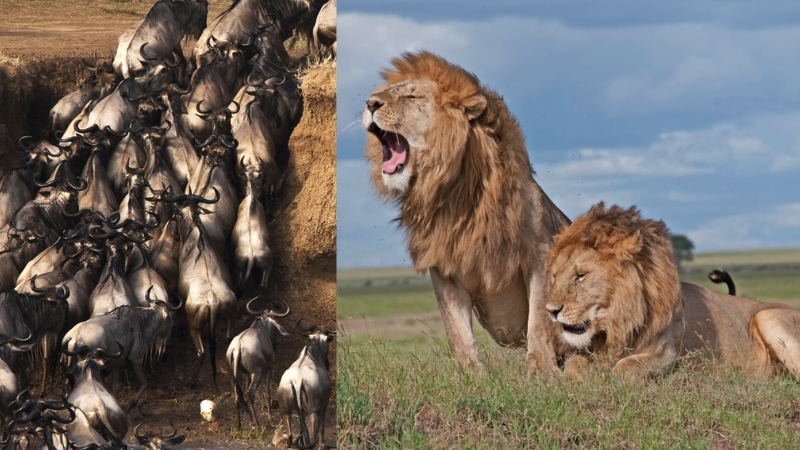
In the south-western reaches of Kenya, where endless plains meet the Oloololo Escarpment, lies a landscape that never stands still. The Masai Mara National Reserve breathes with the rhythm of the earth — a vast mosaic of grasslands, rivers, and skies that change with the passing of each season.
To watch the Mara is to watch time unfold. Each shift in light, rain, and wind alters the fortunes of every creature — from the lion that dozes beneath an acacia tree to the lilac-breasted roller perched high above the savannah.
The Long Rains (April–June): When Life Awakens
As April arrives, the heavens open. The long rains sweep across the plains, drumming gently on parched soil and stirring it back to life.
Within days, the brown expanse turns to a sea of green. Tender shoots rise, insects emerge, and the air vibrates with new energy. Elephants wade through the softened earth, splashing in mud pools, while herds of wildebeest and zebra calve among the fresh grasses.
Predators thrive too — lions sharpen their instincts amid plenty, and cheetahs seize the advantage of short grass to hunt with precision.

This is the season of abundance, when every living thing feeds, grows, and prepares for the challenges to come.
The Cool Dry Season (July–October): Migration and Majesty
When the rains subside, the cool season settles — and with it, the greatest movement of land mammals on Earth.
Over a million wildebeest, zebra, and gazelle surge north from the Serengeti in search of Kenya’s green pastures. The Great Migration transforms the Mara into a living river of hooves and dust.
Every step is fraught with peril.
The Mara River becomes both a lifeline and a graveyard as crocodiles wait beneath the surface. Lions and hyenas follow the herds, guided by instinct and hunger.
Yet amid the chaos lies harmony. This is the Mara’s heartbeat — a story of survival repeated year after year, witnessed by lucky travelers who time their visit to the season’s height.
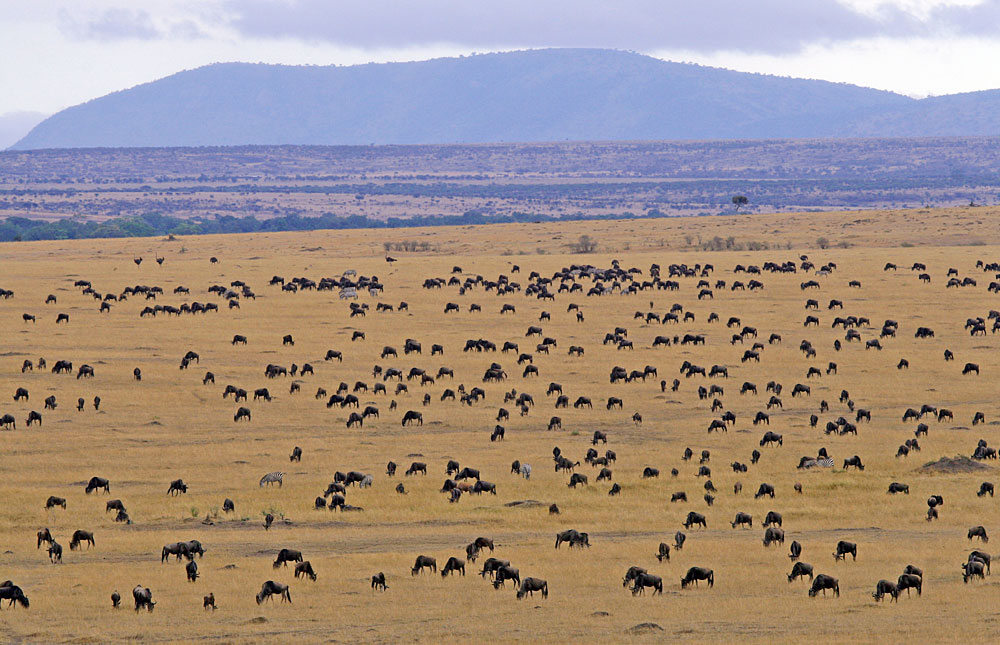
Best Time to Visit:
From July to October, when the migration fills the plains and weather conditions are cool and clear.
The Short Rains (November–December): A Breath of Renewal
After the dust and drama, the sky softens again. The short rains return in gentle bursts, refreshing the plains without flooding them.
This is a quieter beauty — a painter’s season. The grasses turn emerald once more, flowers bloom, and migratory birds arrive from Europe and Asia, filling the air with color and song.
For the animals that remain after the migration, life is easy. Predators grow lazy in the shade, and herds linger near the rivers to graze on renewed pastures.

Many travelers consider this the best time to visit the Masai Mara — fewer tourists, moderate temperatures, and landscapes reborn in light rain.
The Hot Dry Months (January–March): Waiting for Rain
When the year turns, the dry season settles in once more. The earth hardens, the rivers shrink, and dust replaces dew.
Animals cluster around the few remaining waterholes — elephants dig with their trunks to find hidden springs, while buffalo wallow in the last muddy pools.
The sky grows pale, the grass turns brittle, and silence stretches across the plains. Yet this is not lifelessness — it is endurance.
Every creature conserves, adapts, and waits for the cycle to begin anew. The quiet strength of the Mara lies in its ability to survive its own harshness.

A Circle Without End
And then — just as the air grows stillest — clouds build once more on the horizon. The first raindrops fall onto waiting soil, and life begins again.
The Masai Mara seasons are not just passages of weather; they are chapters in a story written by time itself.
Each creature, each blade of grass, each drop of water plays its part in a delicate, unbroken cycle — one that has unfolded for millennia.
To walk here is to witness eternity in motion.
Practical Traveler’s Note
- Best Time to Visit: July–October for the Great Migration; November–February for lush post-rain scenery and birdlife.
- Temperature Range: 12°C (night) to 29°C (day).
- Rainfall Peaks: April–May (long rains), November (short rains).
Final Reflection
The Masai Mara teaches patience. Its beauty lies not in the thrill of a single sighting, but in the continuity of life — how every raindrop, every migration, every dry wind plays a role in sustaining the whole.
Those who linger long enough to feel the rhythm of its seasons leave with more than photographs; they carry an understanding of balance — that delicate thread connecting all living things.